




✨ AI خلاصو
- اسٽيبل ڪوئن پي آئوٽ APIs بلاڪچين رابطي ۽ مقامي فيٽ ڪنورشنز کي پس منظر ۾ سنڀالڻ سان سڌريل پگهار ۽ ورڇ جي ڪم جي وهڪري کي فعال ڪن ٿا.
- According to a joint study by McKinsey and Artemis Analytics, B2B stablecoin payments grew by 733% in 2025, reaching an estimated $226 billion.
- This surge has created opportunities for fintech operators and payroll platform CTOs to build infrastructure that facilitates compliance, throughput, and multi-jurisdictional growth.
- هي مضمون اسٽيبل ڪوئن پي آئوٽ API جي اهم پهلوئن کي ڍڪي ٿو، جهڙوڪ انٽينٽ ريزوليوشن، آئيڊيمپوٽينسي ڪنٽرول، بلڪ پي آئوٽ پرائميٽوز، ۽ آخري ميل آف ريمپ انٽيگريشن.
- It also discusses the impact of the GENIUS Act on payout API compliance architecture and how to approach multi-chain routing for payroll across different networks.
A stablecoin payout API serves as a programmable infrastructure layer for payroll and disbursement workflows. It receives payout instructions, evaluates the appropriate stablecoin network and routing path, applies recipient-level compliance checks, coordinates local fiat conversion at the destination, and returns settlement confirmation to the calling system. The experience can remain streamlined for recipients, with the infrastructure handling blockchain interactions and gas requirements in the background.
By 2026, stablecoin payouts have developed into a meaningful infrastructure category. B2B stablecoin payments grew 733% year-over-year in 2025, reaching an estimated $226 billion and accounting for approximately 60% of real stablecoin payment activity, according to a joint study by McKinsey and Artemis Analytics reported by Bancoli. For fintech operators and payroll platform CTOs, the opportunity now centers on building infrastructure that supports compliance, throughput, and multi-jurisdictional growth from the ground up.
هي گائيڊ ڇا ڍڪي ٿو:
- What a stablecoin payout API handles at the infrastructure level and the capabilities required for production
- GENIUS ايڪٽ ادائيگي APIs لاءِ تعميل جي فن تعمير کي ڪيئن شڪل ڏئي ٿو
- How to approach multi-chain routing for payroll across Solana, Arbitrum, Base, and Optimism
- How to evaluate in-house development, API-integrated partner development, and white-label deployment, including realistic timelines
- What a production-grade stablecoin payout infrastructure journey looks like from architecture to deployment
- Key questions around timelines, technology, specialist development, and infrastructure performance
What Does a Stablecoin Payout API Do at the Infrastructure Level?
A stablecoin payout API coordinates a broader set of technical functions than a simple transfer between two wallet addresses. At production scale, payroll and B2B disbursement systems bring together several infrastructure layers to support reliable execution, compliance, reconciliation, and settlement.
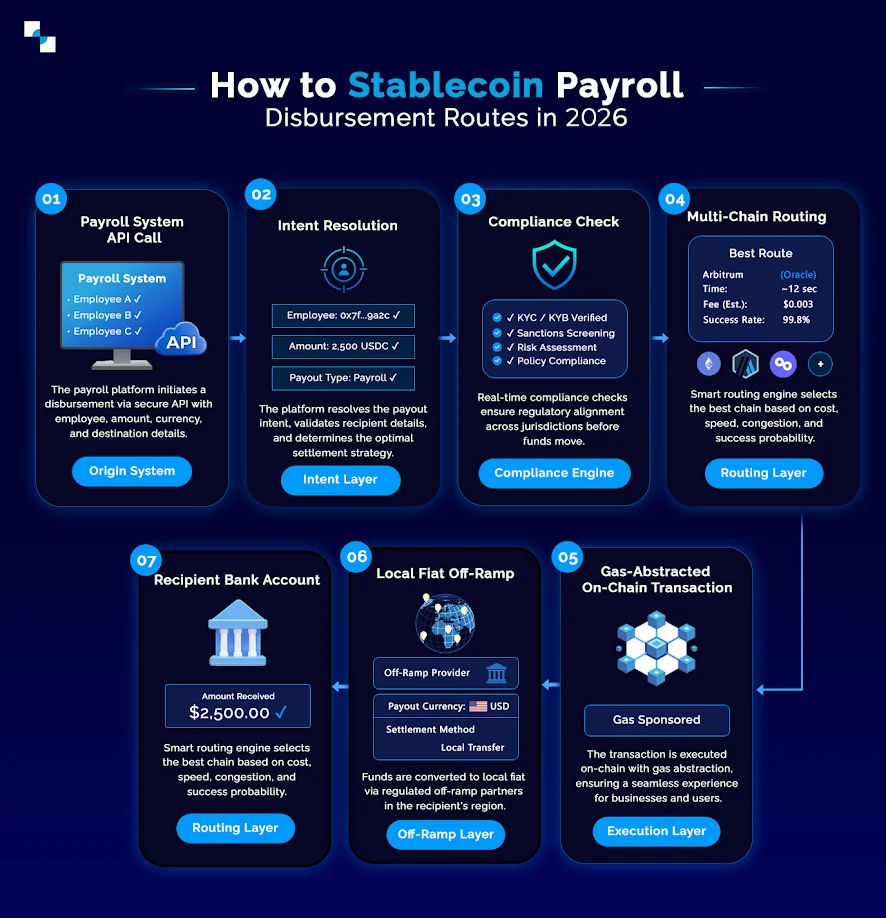
- Intent Resolution: The API receives a payout instruction containing details such as the recipient identifier, amount, currency, and settlement deadline. It then converts that instruction into an executable transaction by selecting the appropriate network, token, and routing path. The calling system can work with a consistent API interface while the infrastructure manages the underlying blockchain decisions.
- Idempotency Controls: Each payout request carries a unique idempotency key. This allows payroll systems to safely handle retries while maintaining a single payout record for each instruction. The control supports accurate processing across automated and high-volume disbursement workflows.
- بلڪ ادائيگي جا ابتدائي جزا: پيداواري انفراسٽرڪچر بيچ اينڊ پوائنٽس کي ظاهر ڪري سگهي ٿو جيڪي هڪ درخواست ۾ هزارين وصول ڪندڙن کي وصول ڪرڻ جي قابل آهن. سسٽم ڪم جي لوڊ کي متوازي آن-چين ٽرانزيڪشن ۾ ورهائي ٿو ۽ هڪ متحد جواب ذريعي وصول ڪندڙ جي سطح جي حيثيت جي معلومات واپس ڪري ٿو.
- في وصول ڪندڙ جي تعميل جا ٿلها: هر وصول ڪندڙ ٽرانزيڪشن جي عمل کان اڳ AML اسڪريننگ، پابندين جي چڪاس، ۽ دائري اختيار جي مخصوص قابليت جي ضابطن مان گذري سگهي ٿو. ادائيگي جي ڪم جي وهڪري دوران انهن ڪنٽرولن کي لاڳو ڪرڻ موجوده ٽرانزيڪشن ۽ وصول ڪندڙ جي حوالي سان ٺهيل تعميل جي فن تعمير کي سپورٽ ڪري ٿو.
- گئس جو خلاصو: ERC-4337 account abstraction and paymaster models can allow the infrastructure to manage network fees on behalf of recipients. As a result, recipients can receive stablecoin value without maintaining native tokens solely for transaction fees. This creates a smoother experience for workforce payroll and other use cases involving recipients with varying levels of blockchain familiarity.
- آخري ميل آف ريمپ انٽيگريشن: The API can connect with local fiat on-ramp and off-ramp providers across destination corridors, supporting conversion from stablecoin value into the recipient’s preferred local currency during final settlement. Traditional remittance costs average 6.49% globally, according to the Rise State of Crypto Payroll Report 2026. Stablecoin rails combined with integrated off-ramp infrastructure can support more efficient settlement models across documented deployments.
- On-Chain Audit Trails: هر ادائيگي هڪ تصديق ٿيل ٽرانزيڪشن رڪارڊ ٺاهي ٿي جيڪا ان جي آئيڊيمپوٽينسي ڪي سان لاڳاپيل ٿي سگهي ٿي. انڊيڪس ٿيل ٽرانزيڪشن ڊيٽا فنانس ۽ تعميل ٽيمن کي ادائيگي جي سرگرمي جو هڪ منظم نظارو ڏئي ٿو ۽ موثر رڪارڊ حاصل ڪرڻ جي حمايت ڪري ٿو.
Here’s how these infrastructure layers work together to move a payroll disbursement from an API call to final settlement:
GENIUS ايڪٽ ادائيگي API تعميل جي فن تعمير کي ڪيئن شڪل ڏئي ٿو؟
The GENIUS Act, signed into U.S. law on July 18, 2025, established a federal framework that gives stablecoin infrastructure operators greater clarity when designing payment systems for the U.S. market. Its implications extend into several core components of the payout API architecture.
- جاري ڪندڙ رزرو جون گهرجون API پرت کي متاثر ڪن ٿيون
The GENIUS Act establishes 1:1 reserve backing requirements for payment stablecoins issued in the United States. API operators processing USDC or USDT at scale can incorporate stablecoin eligibility and issuance verification into their routing and compliance architecture. - ٽرانزيڪشن-وقت پابندين جي اسڪريننگ
ادائيگي جو بنيادي ڍانچو OFAC ۽ لاڳاپيل پابندين جي اسڪريننگ کي ورهائڻ واري ڪم جي وهڪري جي حصي طور انجام ڏئي سگهي ٿو. هي طريقو ٽرانزيڪشن جي عمل جي نقطي تي موجوده تعميل ڊيٽا جي خلاف وصول ڪندڙ جو جائزو وٺندو آهي ۽ آن بورڊنگ ۽ KYC عملن کي پورو ڪندو آهي. - Jurisdiction-Aware Compliance Routing
وفاقي فريم ورڪ لاڳو رياستي سطح جي گهرجن سان گڏ ڪم ڪري ٿو. هڪ پيداوار لاءِ تيار نظام دائري اختيار جي نقشي کي برقرار رکي سگهي ٿو جيڪو وصول ڪندڙ جي جڳهه ۽ ٽرانزيڪشن ڪوريڊور جي بنياد تي لاڳاپيل تعميل ضابطن کي لاڳو ڪري ٿو. - مشين پڙهڻ لائق آڊٽ رڪارڊ
Transaction data can be indexed and stored in formats that support compliance review and operational reconciliation. When on-chain records are structured and linked correctly, they can contribute to a comprehensive audit architecture aligned with broader BSA recordkeeping expectations. - MiCA Support for EU Payroll Corridors
Cross-border payroll systems serving EU recipients can incorporate MiCA-aligned stablecoin routing alongside GENIUS Act considerations for U.S.-origin flows. Since the two frameworks address different authorization and compliance requirements, infrastructure benefits from routing logic that considers the relevant origination and destination jurisdictions.
Take Your Payout Infrastructure to Production
پگهار لاءِ ملٽي چين روٽنگ: سولانا، آربٽرم، بيس، ۽ آپٽيمزم
اسٽيبل ڪوئن پگهار لاءِ بلاڪچين چونڊڻ ۾ آبادڪاري جي وقت، ٽرانزيڪشن جي قيمتن، آخري خاصيتن، ڊولپر ٽولنگ، ۽ اسٽيبل ڪوئن ليڪويڊٽي جو جائزو وٺڻ شامل آهي. USDC ۽ USDT 2026 جي پهرين اڌ دوران سڀني آف ريمپ ٽرانزيڪشن جو 57٪ حصو ورتو، جيڪو هڪ سال اڳ 25٪ کان وڌيڪ هو، Mercuryo ڊيٽا جي رپورٽ موجب. ڪرپٽو رپورٽر. Both stablecoins are available across the major networks discussed below.
| نيٽ ورڪ | Avg. Settlement Time | عام ٽرانزيڪشن جي قيمت | USDC اصلي سپورٽ | Payroll Suitability Notes |
|---|---|---|---|---|
| سولانا | ~400ms | Sub-cent | Yes, Circle native | High throughput for bulk disbursements and high-volume payroll runs. |
| ثالث | ~ 1-2 سيڪنڊ | Low, L2 pricing | ها | Strong finality characteristics with EVM-compatible development tooling |
| بيس | ~ 2 سيڪنڊ | Low, L2 pricing | Yes, Circle native | Deepening liquidity and an expanding fiat off-ramp ecosystem |
| خوشحالي | ~ 2 سيڪنڊ | Low, L2 pricing | ها | بالغ سمارٽ ڪانٽريڪٽ ايڪو سسٽم ۽ فعال ڊولپر ٽولنگ |
A production-grade payout system can evaluate multiple networks dynamically instead of relying on a single settlement path. An orchestration layer can assess stablecoin liquidity, transaction costs, settlement speed, and network conditions before selecting the route for each disbursement.
هي فن تعمير ادائيگي جي پرت کي هڪجهڙائي انٽرفيس برقرار رکڻ جي اجازت ڏئي ٿو جڏهن ته روٽنگ فيصلا API جي پويان ٿين ٿا. پگهار لاءِ اسٽيبل ڪوئن پي آئوٽ API ٺاهڻ وقت صحيح انفراسٽرڪچر ماڊل چونڊڻ ضروري آهي.
Build In-House, API-Integrated Partner, or White-Label: A Decision Framework
Fintech operators can approach stablecoin payout infrastructure through three primary models. Each option offers a different balance of development speed, customization, compliance configuration, and infrastructure ownership.
| طول | گھر اندر ٺاهيو | API-انٽيگريٽيڊ پارٽنر بلڊ | اڇو ليبل |
|---|---|---|---|
| تعميل فن تعمير جي ملڪيت | سڄو | Low, L2 pricing | ها |
| Multi-Chain Routing Control | مڪمل طور تي ڪسٽم | Low, L2 pricing | Yes, Circle native |
| جينيئس ايڪٽ / ايم آءِ سي اي ڪوريج | Dedicated legal and engineering resources | Low, L2 pricing | ها |
| ايڇ آر ايم ايس / اي آر پي انٽيگريشن | مڪمل طور تي حسب ضرورت | Low, L2 pricing | ها |
| انفراسٽرڪچر جي ملڪيت | سڄو | Low, L2 pricing | ها |
گھر جي اندر ترقي ڪڏهن مناسب ٿيندي؟
In-house development can suit operators with an established blockchain engineering team, significant development capacity, and highly specialized requirements. This route provides complete architectural control and supports deeply customized infrastructure decisions.
API-انٽيگريٽڊ پارٽنر بلڊ ڪڏهن مناسب ٿيندو آهي؟
هڪ API-انٽيگريٽڊ پارٽنر بلڊ ڪسٽم انفراسٽرڪچر جي ملڪيت کي اسٽيبل ڪوئن ادائيگين، تعميل آرڪيٽيڪچر، ملٽي چين روٽنگ، ۽ آف ريمپ انٽيگريشن ۾ ماهر ماهر سان گڏ ڪري سگهي ٿو. اهو آپريٽرن لاءِ مناسب آهي جن کي ترتيب ڏيڻ واري تعميل ٿلهن، بلڪ ادائيگي جي صلاحيتن، ۽ HRMS ڪنيڪشن جي ضرورت آهي انهن جي موجوده ٽيڪنالاجي اسٽيڪ جي چوڌاري ٺهيل.
وائيٽ ليبل ڪڏهن مناسب آهي؟
White-label deployment can support organizations looking to introduce stablecoin payout functionality quickly through an established infrastructure platform. This approach can work well when payouts represent an additional product capability and standardized provider configurations align with operational requirements.
For organizations prioritizing recipient-level compliance hooks, jurisdiction-aware routing, and ownership of their disbursement infrastructure, an API-integrated partner build offers a strong balance between customization and speed to production.
Create Infrastructure Built for High-Volume Payouts
Step-by-Step: How a Stablecoin Payout Infrastructure Build Reaches Production
The following sequence outlines an API-integrated partner build designed for payroll and B2B disbursement use cases. Building a stablecoin payouts API for payroll requires a connected approach to infrastructure, compliance, routing, and settlement.
Phase 1: Architecture Scoping and Chain Selection
- متوقع ورڇ جي مقدار، وصول ڪندڙ جاگرافيائي علائقا، ۽ ٽارگيٽ اسٽيبل ڪوئن جهڙوڪ USDC، USDT، يا ٻئي بيان ڪريو.
- ڪوريڊور جي سطح جي قيمت، ليڪويڊٽي، ۽ آخري خيال استعمال ڪندي پرائمري ۽ متبادل زنجير چونڊيو.
- دائري اختيار جي لحاظ کان لاڳو ٿيندڙ تعميل جي گهرجن جو نقشو ٺاهيو، جنهن ۾ GENIUS ايڪٽ، MiCA، ۽ FATF سان لاڳاپيل غور شامل آهن.
- Identify HRMS and ERP integration points and establish the API authentication model
Phase 2: Core API and Smart Contract Development
- Build bulk disbursement endpoints with idempotency key support
- Implement ERC-4337 paymaster functionality for gas abstraction across selected networks
- Develop the smart contract layer and settlement logic aligned with the product architecture
- Integrate on-chain audit trail indexing connected to payout and idempotency records
مرحلو 3: تعميل ٿلهو انضمام
هي مرحلو ڪور API ڊولپمينٽ سان گڏ اڳتي وڌي سگهي ٿو.
- Connect OFAC and relevant sanctions screening to the transaction workflow
- Build a jurisdiction mapping layer for applying the appropriate compliance rules by recipient and corridor
- Integrate AI-driven AML and transaction risk scoring at the API middleware layer
- پگهار وصول ڪندڙ جي آن بورڊنگ لاءِ KYC تصديق ڪنيڪٽرن کي ترتيب ڏيو
Phase 4: Off-Ramp and Multi-Currency Settlement
- Integrate local fiat off-ramp providers across priority payment corridors
- Implement automated FX conversion mechanisms for efficient rate execution
- ڪالنگ پي رول سسٽم لاءِ سيٽلمينٽ تصديق ڪال بيڪ ترتيب ڏيو
- Enable multi-currency settlement capabilities across supported destination markets
مرحلو 5: HRMS/ERP ڪنيڪٽوٽي ۽ معيار جي ضمانت
- Build and test integrations with target HRMS and ERP environments, including SAP, Workday, or custom systems
- متوقع پگهار جي مقدار تي بلڪ ورڇ لوڊ ٽيسٽنگ ڪريو.
- Complete end-to-end compliance workflow testing and audit log validation
- پيداوار جي تعیناتي کان اڳ سمارٽ ڪانٽريڪٽ آڊٽ سپورٽ کي هم آهنگ ڪريو
Phase 6: Production Deployment and Monitoring, Week 16+
- Deploy to mainnet with on-chain audit capabilities active from launch
- Enable real-time transaction visibility for finance and compliance teams
- Configure anomaly detection and alerting for disbursement patterns
- ادائيگي جي راهدارين ۾ آبادڪاري جي تصديق لاءِ SLA مانيٽرنگ قائم ڪريو.
raڪڻ UP
The GENIUS Act provides a clearer regulatory framework for stablecoin infrastructure operators building for the U.S. market. At the same time, growing stablecoin activity continues to expand the importance of reliable infrastructure for payroll and B2B disbursements. The Rise State of Crypto Payroll Report 2026 places stablecoin supply above $315 billion and stablecoin-adjusted transaction volume at approximately $10.2 trillion in 2026. As B2B adoption continues to develop, payroll and disbursement infrastructure represents an increasingly important layer of the broader stablecoin ecosystem. A production-ready architecture brings together several core capabilities: idempotent bulk payout operations, transaction-aware compliance workflows, dynamic multi-chain routing, gas abstraction, comprehensive audit records, and last-mile off-ramp connectivity across relevant currency corridors. When these components are designed as part of a connected infrastructure layer, operators can build stablecoin payout platforms around their specific transaction volumes, jurisdictions, integration requirements, and growth plans.
اينٽير ۾، اسان مڪمل اسٽيبل ڪوئن پي آئوٽ API پليٽ فارم ٺاهيندا آهيون جيڪي سمارٽ ڪانٽريڪٽ انفراسٽرڪچر، ڪمپلائنس ورڪ فلوز، ملٽي چين روٽنگ، آف ريمپ انٽيگريشن، ۽ HRMS ڪنيڪٽوٽي کي ڍڪيندا آهن. هي طريقو هر آپريٽر جي پراڊڪٽ گهرجن ۽ ٽيڪنيڪل ماحول جي چوڌاري ٺهيل انفراسٽرڪچر پهچائڻ تي ڌيان ڏئي ٿو. اسٽيبل ڪوئن ريل تي پگهار منتقل ڪرڻ چاهيو ٿا ؟ اچو ته توهان جي ادائيگي جي مقدار، وصول ڪندڙ مارڪيٽن، تعميل جي گهرجن، ۽ HRMS انٽيگريشن کي پيداوار لاءِ تيار انفراسٽرڪچر پلان ۾ نقشو ڪريون.
وچان وچان سوال ڪرڻ
01. اسٽيبل ڪوئن پي آئوٽ API ڇا آهي ۽ اهو ڪهڙا ڪم ڪندو آهي؟
A stablecoin payout API serves as a programmable infrastructure layer for payroll and disbursement workflows, handling payout instructions, compliance checks, local fiat conversions, and providing settlement confirmations while managing blockchain interactions in the background.
02. How has the market for stablecoin payouts evolved recently?
By 2026, stablecoin payouts have become a significant infrastructure category, with B2B stablecoin payments growing 733% year-over-year in 2025, reaching approximately $226 billion and accounting for about 60% of real stablecoin payment activity.
03. What key considerations should fintech operators focus on when developing stablecoin payout infrastructure?
Fintech operators and payroll platform CTOs should focus on building infrastructure that supports compliance, throughput, and multi-jurisdictional growth, while evaluating options for in-house development, API-integrated partner development, and white-label deployment.