



✨ AI Summary
- Argentina's economic conditions have led to widespread adoption of cryptocurrency, not due to trend-chasing, but as a practical financial tool.
- This has resulted in a surge in demand for secure, scalable wallet infrastructure, creating opportunities for fintech firms, digital banks and Web3 businesses.
- With the nation's inflation crisis, dollar restrictions and devaluation of the peso, digital assets have become a means of preserving purchasing power, accessing dollar-denominated value, and moving money across borders.
- The shift towards using crypto for everyday financial activities has created a need for user-friendly, localized crypto wallet platforms.
- The blog post explores what Argentina's growing crypto adoption means for wallet providers, investors and Web3 entrepreneurs, and highlights the advantages of investing in white label crypto wallet development.
“Argentina demonstrates a simple truth: when economic realities accelerate crypto adoption, demand for secure, compliant, and scalable wallet infrastructure becomes inevitable. ”
Argentina did not adopt cryptocurrency because of speculation or trend-chasing. It adopted crypto because its own currency stopped being a reliable place to hold value.
Here, cryptocurrency has increasingly become a practical financial tool. Individuals use digital assets to preserve purchasing power, access dollar-denominated value, move money across borders, and participate in alternative financial ecosystems. As adoption expands beyond niche communities, a new opportunity is emerging for fintech firms, payment providers, digital banks, remittance companies, and Web3 businesses: owning the customer relationship through a localized crypto wallet platform.
The question is no longer whether Argentinians are willing to use crypto. The more strategic question is this:
Who will own the infrastructure through which millions of users access digital assets, stablecoins, payments, and Web3 services?
For organizations evaluating entry into Latin America’s digital asset economy, Argentina’s crypto market offers compelling reasons to invest in white label crypto wallet development rather than relying solely on third-party exchanges or external platforms. Let’s scroll through the blog to explore what Argentina’s growing crypto adoption means for wallet providers, investors, fintech leaders, and Web3 entrepreneurs evaluating the next phase of digital asset infrastructure.
Argentina’s Inflation Crisis and Dollar Restrictions Created the Perfect Conditions for Crypto Adoption
To understand why crypto adoption accelerated so rapidly in Argentina, it is important to look beyond technology and examine the economic realities facing millions of citizens.
For decades, Argentina has struggled with recurring inflation, currency devaluation, and declining confidence in the peso. When inflation rises, the purchasing power of savings falls. Money held in a bank account gradually loses value, making it increasingly difficult for households and businesses to preserve wealth, plan for the future, or maintain financial stability.
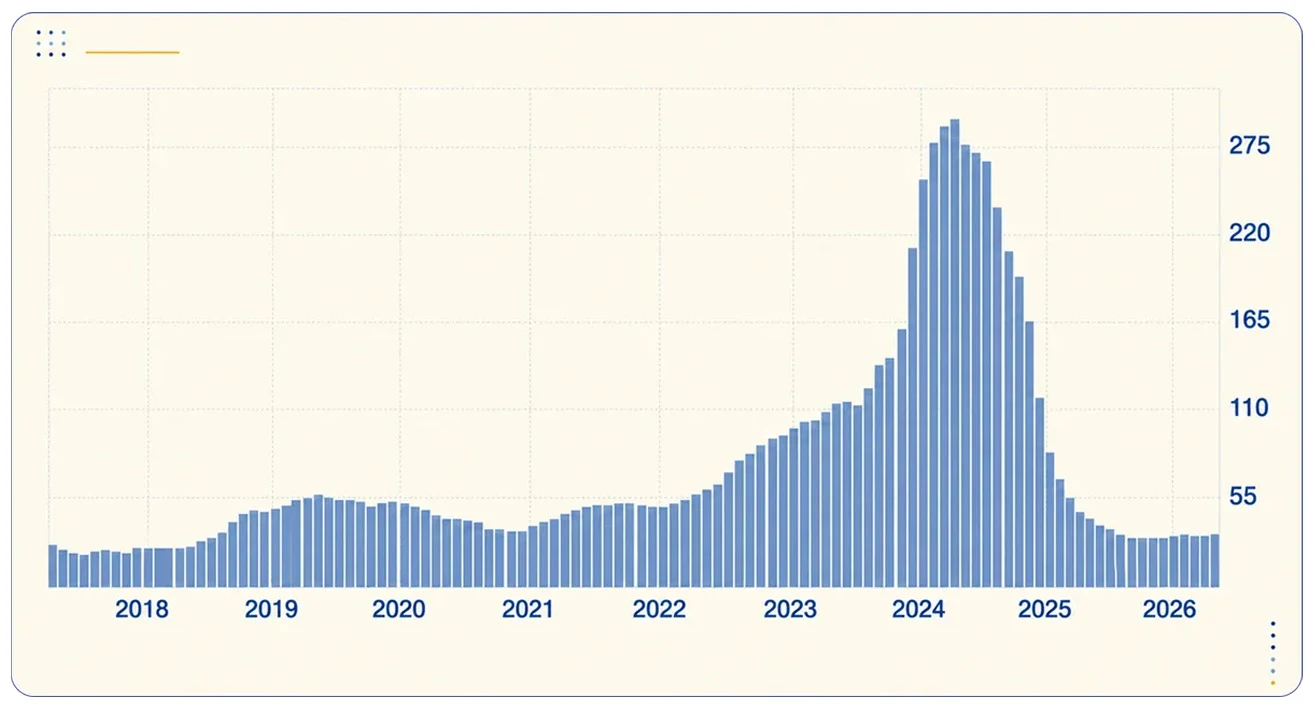
Source link: https://defillama.com/research/report/crecimiento-argentines-financial-reality-and-the-impossible-dollar-access
The 3 Forces Behind Argentina’s Crypto Boom
| Economic Challenge | Impact on Citizens | Why Crypto Became Attractive |
|---|---|---|
| Persistent Inflation | Savings rapidly lost purchasing power as prices continued to rise. | Stablecoins provided access to dollar-linked value and a more stable store of wealth. |
| Restricted Access to U.S. Dollars | Strict currency controls limited the ability to legally purchase and hold dollars. | USDT and USDC offered a digital alternative to dollar ownership. |
| Currency Devaluation Risks | Many citizens expected the peso to weaken further over time. | Crypto assets enabled faster access to global financial markets and alternative stores of value. |
From Investment Asset to Financial Utility
As inflation accelerated and access to dollars became increasingly difficult, many Argentinians began using crypto for practical financial purposes rather than speculative trading.
Common use cases included:
- Preserving purchasing power through stablecoins
- Receiving international payments and remittances
- Holding dollar-denominated digital assets
- Moving money across borders efficiently
- Accessing alternative financial services outside traditional banking channels
This behavioral shift is what makes Argentina particularly significant for wallet providers and fintech innovators.
Unlike markets where crypto activity is concentrated around trading, Argentina demonstrates how digital assets can evolve into everyday financial infrastructure. As a result, demand is growing for secure, user-friendly white label cryptocurrency wallets that support real-world financial activity.
Argentina Is Becoming a Real-World Validation Case for Crypto Utility
Many crypto markets are driven primarily by investment activity. Argentina stands out because digital assets increasingly serve practical economic purposes. The end users frequently seek:
- Access to dollar-linked digital assets
- Faster cross-border transfers
- Protection against currency volatility
- Alternative savings mechanisms
- Easier participation in digital finance ecosystems
- Mobile-first financial services

Source link: https://defillama.com/research/report/crecimiento-argentines-financial-reality-and-the-impossible-dollar-access
This behavioral shift matters because wallet adoption follows utility. When users rely on digital assets for everyday financial activities, demand grows for intuitive, secure, and locally relevant cryptocurrency wallet app development solutions rather than simple trading interfaces.
For businesses evaluating market opportunities, this creates a significantly different commercial landscape than a purely speculation-driven market.
Why Stablecoins Are Quietly Reshaping Customized Crypto Wallet Demand
One of the strongest indicators of long-term blockchain wallet opportunity in Argentina is the growing use of stablecoins. For many users, stablecoins function less as crypto assets and more as digital financial instruments. This changes wallet expectations. A modern wallet must support:
| User Expectation | Wallet Requirement |
|---|---|
| Hold dollar-denominated assets | Multi-asset support |
| Move funds globally | Low-cost transfers |
| Convert between assets | Integrated swap infrastructure |
| Access digital payments | Merchant payment capabilities |
| Earn yield opportunities | DeFi integrations |
| Manage funds securely | MPC security architecture |
As stablecoin adoption expands, businesses increasingly require specialized stablecoin wallet infrastructure rather than generic wallet applications. This is one reason investors are exploring white label stablecoin wallet solutions capable of supporting both retail and institutional use cases.
The Hidden Opportunity: Owning the User Relationship
Many businesses entering crypto initially focus on exchanges. However, exchanges often own the customer experience. Wallets create a different strategic advantage.
A customized cryptocurrency wallet app allows organizations to:
- Control branding and customer experience
- Build proprietary user ecosystems
- Introduce financial products gradually
- Generate transaction-based revenue
- Launch loyalty and rewards programs
- Integrate banking and payment services
- Capture valuable user engagement data
In markets like Argentina, where users increasingly depend on digital assets for practical financial needs, wallet ownership becomes significantly more valuable than acting as a referral source to external platforms.
Enterprise Features That Separate Serious Web3 Crypto Wallets From Basic Products
Not every blockchain wallet solution suits large-scale deployment. Enterprise buyers should look for capabilities such as:
- Multi-chain architecture
- Stablecoin wallet support
- Institutional custody frameworks
- MPC security
- Crypto Virtual Card Integration
- White-label customization
- API-driven integrations
- Banking infrastructure connectivity
- Fiat on-ramp and off-ramp support
- Cross-chain asset management
- Analytics and reporting dashboards
- Automated compliance workflows
These capabilities often determine whether a wallet can evolve into a long-term revenue-generating platform.
Why Building a Crypto Wallet From Scratch May Not Be the Smartest Move Right Now
Enterprise decision-makers often face a critical question: Should we build our own wallet infrastructure or launch using a white label crypto wallet platform? The answer usually depends on speed, compliance requirements, technical resources, and market timing.
| Factor | Custom Development | White Label Crypto Wallet |
|---|---|---|
| Time to Market | Long | Faster |
| Development Cost | Higher | Lower |
| Maintenance Burden | Significant | Reduced |
| Security Engineering | Internal Responsibility | Framework Already Available |
For organizations seeking market entry within months rather than years, white label blockchain wallet app solutions often provide a more commercially viable path.
What Enterprise Buyers Should Actually Evaluate?
Many wallet projects fail because organizations focus heavily on user-facing features while overlooking infrastructure requirements. Enterprise crypto wallet development requires evaluating several layers simultaneously.
a) Security Architecture
Security is no longer a feature. It is the product. Critical considerations include:
- MPC crypto wallet architecture
- Multi-signature authorization controls
- Hardware security module integration
- Role-based access management
- Transaction monitoring
- Fraud detection mechanisms
- Secure key generation and recovery
For institutional deployments, MPC crypto wallet frameworks have become particularly important because they eliminate single points of failure associated with traditional private key management.
b) Scalability and Performance
As adoption grows, wallet infrastructure must support:
- Millions of wallets
- High transaction throughput
- Multi-chain asset management
- Real-time synchronization
- Cross-border transaction activity
This is especially important for businesses targeting Latin American markets where mobile adoption is high, and user acquisition can accelerate rapidly.
c) Regulatory Adaptability
Regulatory frameworks continue to evolve globally. A crypto wallet infrastructure should support:
- KYC integrations
- AML screening
- Travel Rule readiness
- Audit logging
- Risk monitoring systems
- Compliance reporting capabilities
The objective is not simply meeting current requirements but preparing for future regulatory developments.
Build Your Argentina-Ready Customized Wallet!
Compliance Will Define Long-Term White Label Wallet Success
Regulatory Preparedness Will Separate Market Leaders From Market Entrants
Argentina’s growing crypto adoption presents a compelling market opportunity, but sustainable growth will depend on more than user acquisition and wallet functionality. As digital asset regulation continues to evolve globally, wallet providers must ensure their platforms are built with compliance readiness from day one. For businesses launching a white label crypto wallet, compliance is increasingly becoming a competitive differentiator rather than a regulatory obligation.
Key areas enterprises should evaluate include:
- KYC and customer identity verification to support user onboarding.
- AML screening and transaction monitoring to identify suspicious activity.
- Travel Rule readiness for cross-border digital asset transfers where applicable.
- Risk scoring and audit trails for operational transparency.
- Data privacy controls aligned with global standards such as GDPR.
- Multi-jurisdiction adaptability to support expansion beyond Argentina into broader Latin American and international markets.
The most successful wallet providers will not be those that simply meet today’s requirements. They will be those that build compliance-ready infrastructure capable of adapting to future regulatory changes without disrupting user experience or business operations.
Argentina’s Next Growth Phase May Be Payments, Not Trading
Many organizations still associate crypto primarily with trading. However, wallet infrastructure increasingly supports broader financial activities.
Emerging opportunities include:
- Stablecoin merchant payments
- Payroll disbursements
- International contractor payments
- Remittance corridors
- Digital banking integrations
- Embedded finance solutions
- Cross-border B2B settlements
This evolution changes the role of the blockchain wallet app. Instead of acting solely as a storage mechanism, the wallet becomes a financial operating system connecting users, merchants, banks, payment processors, and digital asset ecosystems.
The Rise of Web3 Wallet Infrastructure in Latin America
Another trend worth watching is the convergence of financial services and Web3 functionality. A modern Web3 crypto wallet can combine:
- Stablecoin management
- DeFi access
- NFT support
- Tokenized asset ownership
- Digital identity capabilities
- Cross-chain interoperability
- Smart contract interactions
For businesses planning long-term growth, investing in Web3 wallet infrastructure today may create future opportunities beyond payments and asset custody. The enterprises that win will likely be those that view wallets as expandable financial platforms rather than standalone applications.
This Is Where Technology Partners Like Antier Become Strategic Assets
Argentina’s accelerating crypto adoption signals a structural shift in how individuals and businesses access, preserve, and transfer value. As stablecoins increasingly emerge as a preferred financial instrument, the strategic opportunity extends far beyond digital asset trading to the underlying wallet infrastructure that enables secure and compliant participation in this evolving ecosystem.
Success, however, requires more than launching a wallet. It demands the right architecture, security framework, compliance strategy, and scalability roadmap from day one.
This is where Antier brings a distinct advantage. With deep expertise across white label crypto wallet development, stablecoin infrastructure, MPC security, multi-chain ecosystems, and enterprise-grade blockchain engineering, Antier helps businesses move from market opportunity to market leadership. Instead of navigating complex technology, compliance, and deployment challenges alone, enterprises can accelerate their go-to-market journey with a partner that understands both the business opportunity and the engineering required to capitalize on it.
Connect with our experts today!
Frequently Asked Questions
01. Why did Argentina adopt cryptocurrency?
Argentina adopted cryptocurrency primarily due to economic challenges, including inflation and currency devaluation, which made its national currency an unreliable store of value.
02. How are individuals in Argentina using cryptocurrency?
Individuals in Argentina use cryptocurrency to preserve purchasing power, access dollar-denominated value, move money across borders, and engage in alternative financial ecosystems.
03. What opportunity does Argentina's crypto market present for businesses?
Argentina's growing crypto adoption presents an opportunity for fintech firms, payment providers, and Web3 businesses to develop localized crypto wallet platforms and own customer relationships in the digital asset economy.