




✨ AI Summary
Yes. On April 13, 2026, the SEC’s Division of Trading and Markets issued a staff statement mentioning a conditional five-year safe harbor for certain DEX front-ends and self-custodial wallets. To qualify, providers must satisfy 11 cumulative conditions, including objective and verifiable transaction routing, no custody of assets, no solicitation or trade recommendations, venue-and product-agonistic fees. Breach of any condition or engagement in prohibited activities removes the safe harbor.
If you’re a US-based founder who shelved DEX development because the SEC might call you a broker” or a fintech CTO whose legal team blocked every DeFi integration, it’s time to rethink. Decentralized exchanges (DEXs) now process a structurally significant share of global crypto volumes. The cumulative DEX spot market share tripled in June 2026, with volumes reaching 12.8T from $4.15T in Dec 2024.
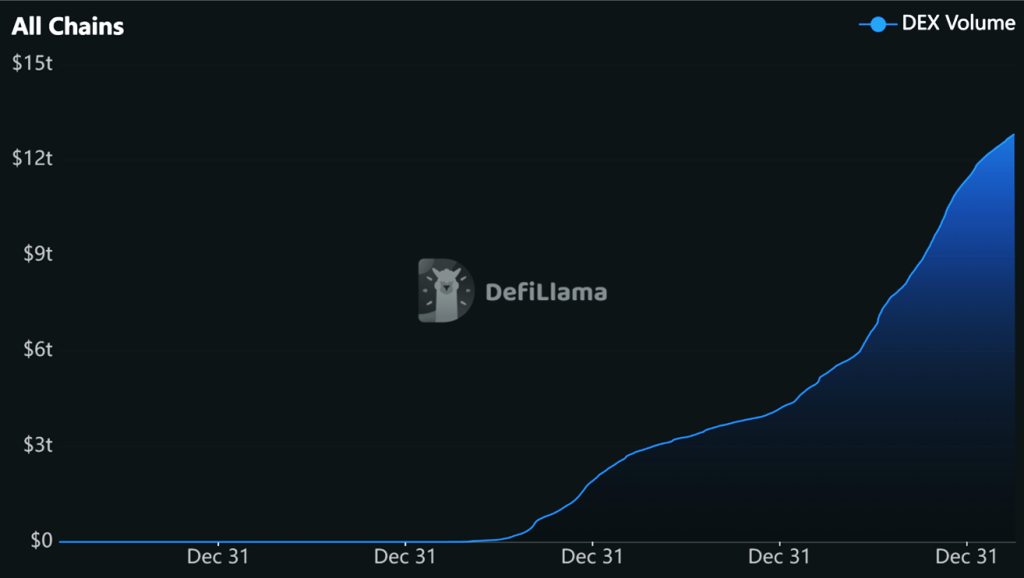
Source: https://defillama.com/dexs?groupBy=cumulative
Perpetual DEX share, on the other hand, grew dramatically from cumulative volumes equalling $4T in Dec 2024, to $16.2T in June 2026.
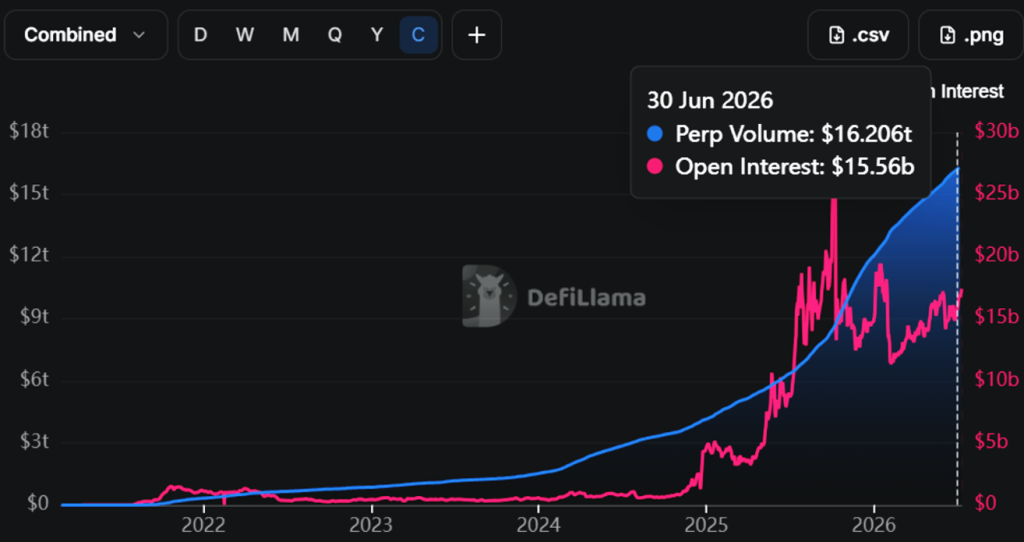
Source: https://defillama.com/perps?groupBy=cumulative
Most of the growth we’ve mentioned happened inside the US legal gray zone. The April 2026 SEC staff statement introduced the DeFi Safe Harbor that drew a bright, operational line between a passive software interface and a regulated broker. For anyone planning decentralized exchange development in 2026, that line is now the most critical basis for technical architecture.
What the SEC Safe Harbor Actually Says
On April 13, 2026, the SEC’s Division of Trading and Markets issued a staff statement that gave DEX front-ends and self custodial wallets a conditional five-year exemption from broker-dealer registration. The exemption period sunsets on April 13, 2031. The covered category for exemption is any software that “converts user-identified transaction parameters such as asset, order direction, volume, and price into blockchain-executable instructions” through non-custodial wallets. In plain terms, the covered category in SEC Safe Harbor constitutes websites, browser extensions, and mobile apps that help users interact with decentralized protocols.
The exemption is not without boundaries. Here’re the three boundaries that matter before you finally kick off your decentralized exchange development and celebrate the wave off.
- It is a staff statement, not a formal rule: Commissioners can reverse it, and a change in SEC leadership could withdraw the guidance overnight. Durable protection depends on the CLARITY Act becoming law.
- It sunsets automatically: The exemption lapses on April 13, 2031 if the SEC takes no further action.
- It only covers broker-dealer registration: Anti-fraud and anti-manipulation liability under the Exchange Act applies in full. A compliant trading front-end can still face enforcement for fraudulent conduct or manipulative trading patterns.
4 Requirements For Decentralized Exchanges To Secure the Safe Harbor
The Safe Harbor rests on four non-negotiable conditions. Violating even one triggers immediate loss of protection and reinstates full broker-dealer registration requirements. Here is what each safe harbour condition means for decentralized exchange software and what breaks it.
| Conditions For SEC’s Safe Harbor | What it requires | What breaks compliance |
|---|---|---|
| No Custody | The front-end operator must never hold user funds, private keys, or stablecoins under any circumstances. Users must be able to retain full control of assets end to end. |
|
| No Solicitation | Decentralized exchange software must display market data and educational content only. It should not display token recommendations, investment advice, or curated “picks.” |
|
| Objective Routing | Routes must be selected on transparent, independently verifiable criteria that factors in liquidity, latency, transparency, verifiability, neutrality, auditability, and security. |
|
| Venue-Agnostic Fees | Fees should be identical regardless of product, execution route, or counterparty. Flat or transaction-based fees are fine to implement in decentralized exchange software. |
|
Affiliations with trading venues, including the protocol itself, remain permitted, but only with disclosed affiliation and arm’s-length terms, mirroring traditional conflict-of-interest rules.
The SEC’s approach is purely behavioral. It doesn’t care what crypto exchange software calls themselves. It only cares about how the code and the team actually work. If the DEX’s code simply sits there on the blockchain, acts entirely as a neutral tool, and lets users interact with smart contracts without operators’ ongoing intervention. If the operators are actively routing orders to specific venues to maximize profits, pushing trade recommendations, or acting as a middleman, they won’t be exempted and the brokers’ rule applies to them.
What these Four Requirements Mean for Your DEX Architecture
This is where most coverage stops and where real decentralized exchange development starts. To comply, decentralized exchanges have to build/rebuild various components of their DEX as per the SEC’s newly announced requirements.
- Front-end/protocol separation
The exemption protects the interface, not the venue. DEX operators must structure the front-end as a distinct layer with its own entity, codebase, and disclosures. The protocol’s master controls such as admin keys, multi-sig wallets, and treasury funds must be managed directly on the blockchain, completely separated from the team hosting the website. If the front-end team can freeze funds or execute on a user’s behalf, regulators will treat it as exercising control.
- Non-custodial wallet integration by construction
Every flow, including swaps, LP deposits, bridging, gas abstraction, etc. must complete without the operator ever taking possession. DEX development teams implementing account-abstraction patterns and session keys need careful review as any convenience features that hold user assets for even one block can breach Pillar 1.
- Routing as auditable code
“Objective routing” means that the automated order system in the decentralized exchange software cannot be a “black box” that hides how it makes decisions. Instead, a decentralized exchange development team must publish the exact, step-by-step rules it uses to choose trade routes, like showing the specific math and formula weights used to balance speed, cost, and security. This is implemented so that anyone, including regulators can independently verify how the trades were handled.
- Fee logic with no venue awareness
DEX development teams must hard-code fee calculations so they cannot vary by token, route, or counterparty. If your monetization model depends on venue rebates or PFOF-style (Payment for Order Flow) arrangements, it is incompatible with the harbor.
- Marketing and UI copy as a compliance surface
Historically, phrases like “best execution,” “top picks,” and “recommended pools” were treated as casual marketing or growth copy to drive user engagement. Under the current compliance framework, these terms are strictly legal categories, and they cannot be used unless they are backed by objective, verifiable data.
At Antier, this is exactly how we scope compliant DEX development engagements. The four pillars enter at the architecture stage, shaping the routing engine, wallet layer, fee module, and even the CMS.
Compliant DEX Development Across Jurisdictions: US vs UK vs EU vs UAE vs Australia
| Region | Framework and Status (2026) | What DEX Development Teams Must Do |
|---|---|---|
| United States |
|
|
| United Kingdom |
|
|
| European Union |
|
|
| UAE (Dubai) |
|
|
| Australia |
|
|
Regulators are separating the protocol from the operator and checking who actually has control before requiring registration or authorization.
- The US addresses this with a multi‑condition safe harbor centered on no custody, no recommendations, objective routing, and neutral fees.
- The UK and EU address this with “identifiable controlling entity”.
- The UAE and Australia’s licensing perimeters verify this.
Architecture that minimizes and documents operator control is the common passport.
How To Build A Compliant DEX in 2026?
| Factor | Clone Script | Compliance-Ready White Label DEX | Compliance-First Custom DEX Development |
|---|---|---|---|
| Safe Harbor alignment | None Routing, fees, and custody logic in most clone scripts are inherited from a decentralized exchange software built before 2026. | Pre-built four-pillar modules with objective routing, venue-agnostic fees, non-custodial wallet layer | Full Pillars are engineered into architecture and documented for regulators from day 1. |
| Time to launch | 2-4 weeks | 4-10 weeks | 4-9 months |
| Cost range | $15k-$40k | $80k-$300k | $300k-$2M+ |
| Multi-jurisdiction support | No |
| Dual-track front-ends (compliant + permissionless), per-market disclosures |
| Regulatory risk | High, one solicitation feature or fee tier can void the exemption. | Low-to-moderate, vendor dependency | Lowest Audit trail and legal architecture are built in |
| Best for | Testing a concept offshore | Funded startups targeting US/UK/UAE launch windows | Fintechs, institutions, and regulated venues |
The 7-Point Compliance Checklist for DEX Development Teams Seeking to Launch In the US
- Custody audit: DEX development teams must map every flow where the system touches user assets, including bridging, batching, and gas abstraction, and eliminate operator possession.
- Routing documentation: Decentralized exchange software operators must publish objective route-selection criteria that factor in liquidity, latency, and security scoring. They must also keep verifiable logs of routing decisions.
- Fee neutrality review: DEX development teams must confirm that fees are identical across products, routes, and counterparties. They must also remove any PFOF or venue-rebate revenue stream.
- Content and UI sweep: Decentralized exchanges must also remove trade recommendations, curated token lists, and superlative route labels (“best price,” “most reliable”) from product and marketing surfaces.
- Affiliation disclosure: Decentralized exchange teams must document and disclose any relationship with the underlying protocol or venues, on arm’s-length terms.
- Jurisdiction matrix: Decentralized exchange software must also geo-fence or secure licenses as per the markets.
- Safe Harbor pillars for the US
- FCA perimeter analysis for the UK
- VARA licensing for Dubai
- AFS licensing for Australia
- MiCA decentralisation assessment for the EU
- CLARITY readiness: At last, DEX development teams must track the Senate reconciliation. If the decentralized exchange’s roadmap includes order matching or custody, plan for CFTC digital commodity exchange registration and BSA-grade KYC/AML.
Building Inside the SEC’s Safe Harbor with Antier
The Safe Harbor rewards teams that treat compliance as system design. Antier’s decentralized exchange development practice builds SEC-aligned DEX architectures with non-custodial wallet layers, auditable smart order routing, venue-agnostic fee engines, and dual-track front-ends, along with liquidity, matching, and security infrastructure.
Antier has shipped for exchanges across the US, UK, UAE, and APAC. Whether you are
- launching a spot DEX inside the US
- Adding a compliant DeFi module to a fintech stack
- Restructuring an existing platform before the FCA’s October 2027 regime
our compliance-first engineering and in-market regulatory experience compress both time-to-launch and legal exposure.
The five-year clock started on April 13, 2026. Decentralized exchange development teams that architect for the four pillars now will spend the window compounding liquidity and users and not re-engineering under enforcement pressure.
Talk to Antier’s DEX development consultants to scope compliant build.
Frequently Asked Questions
01. Is it legal to build a DEX in the US in 2026?
Yes. Under the SEC's April 13, 2026 staff statement, DEX front-ends and self-custodial wallets are exempt from broker-dealer registration for five years if they hold no custody, make no recommendations, route objectively, and charge venue-agnostic fees. Anti-fraud liability still applies, and the protocol layer may face separate obligations if it exercises control over user funds or orders.
02. Does the SEC Safe Harbor cover the DEX protocol itself?
No. The exemption covers the interface layer — software converting user-identified parameters into blockchain-executable instructions via non-custodial wallets. Smart contracts, liquidity pools, and matching venues are addressed separately, primarily by the pending CLARITY Act's control-based framework.
03. What voids Safe Harbor protection?
Any single pillar violation: taking custody of funds or keys, recommending tokens or curating lists on subjective criteria, non-transparent or affiliated routing, Payment for Order Flow, labeling routes “best price,” or charging fees that vary by product, route, or counterparty.
04. Do compliant DEXs need KYC in 2026?
A purely non-custodial US front-end inside the Safe Harbor does not itself trigger KYC. But fiat on-ramps, custodial features, and digital commodity broker/dealer activity carry Bank Secrecy Act obligations — and licensed regimes in the UK (FCA), UAE (VARA), and Australia (AFS/AUSTRAC) impose their own AML requirements. Most multi-market DEXs implement geo-aware, tiered KYC.
05. How much does compliant DEX development cost?
Compliance-ready white-label DEX deployments typically run $80k–$300k with launch in 4–10 weeks; custom compliant-by-design platforms range from $300k to $2M+ over 4–9 months, depending on order-book architecture, jurisdictions covered, and licensing scope. Retrofitting compliance after launch generally costs more than designing for it.