


✨ AI Summary
– Building a crypto exchange software in 2026 costs between $45K (white label DEX) and $1.3M+ (institutional CEX with full security infrastructure).
– Security costs for crypto exchange development are 30-40% higher in 2026, driven by AI-powered attack vectors that require new infrastructure layers.
– White label exchange development takes 4-8 weeks and costs $45K-$120K. Custom institutional crypto exchange development which takes 12-18 months costs $650K-$1.3M+.
Every crypto exchange development cost guide gives you a $50K to $500K estimate. Frankly that’s not a budget but a shrug, and sometimes a hook. Those ranges come from agencies averaging wildly different projects, such as an MVP DEX and a dual-licensed institutional crypto exchange. Such averages are useless since they don’t tell you anything about your crypto exchange development budget requirements.
This guide is different since it draws on Antier’s project data from 200+ exchange builds and integrations, delivered across 12+ jurisdictions. When it gives you a number, it shows exactly what sits at the other end.
In 2026, the cryptocurrency exchange development cost estimation is harder since AI has been leveraged to make development easier but it also raises the security cost.
Why Most Crypto Exchange Guides Are Outdated and Why 2026 Is Different?
Businesses might feel that crypto exchange development is easier, quicker and cheaper after the advent of AI. But in actuality, the development costs for custom builds and AI-accelerated white label crypto exchanges are higher than any prior year due to cost of exploitation lowering to $1.22 per smart contract with AI-powered attackers. The highest number of breaches in April 2026 has reset the security standards for cryptocurrency exchange software development.
Let’s now shed light on the three reasons why the generic crypto exchange development cost guides mislead:
- They ignore exchange type and jurisdiction:
A VARA-compliant CEX operating in the UAE and an unregulated DEX MVP have no comparison at all. They’re not the same product category and quoting a single huge range for the both is like quoting one price for a studio apartment and commercial office tower.
- They were written before April 2026:
Most of the crypto exchange development cost guides were written before April 2026. The cost dynamics changed after the DeFiLlama report declared April 2026 as the most-hacked month with $625M worth of losses recorded across 30 exploits. The Drift protocol breach that lost $285M and the KelpDAO breach that lost $292M, happened in April 2026, and used attack methodologies that pre-2026 security infrastructures were not built to dodge.
- They treat AI as a cost-saver.
While most cost guides either overlook AI or consider it as a time and budget saving tech, they actually don’t prove it. As stated already, one of the most measurable impacts of AI on crypto exchange software is on its security. Furthermore, our crypto exchange developers report massive AI token consumption when relying heavily on automated coding tools rather than manual workflows. More importantly, this dependency has sharply increased auditing timelines and costs, as validating AI-generated code requires significantly deeper security scrutiny.
Crypto Exchange Development Cost By Exchange Type: Real Data From 200+ Exchange Builds
Based on Antier’ 200+ crypto exchange development and integration deliveries completed between 2017-2026, estimated total development costs as per exchange type are as follows:
| Exchange Type | Base Build Cost | 2026 Security Addition | Total Range | Time to Launch | Where Most Budget Goes |
|---|---|---|---|---|---|
| White Label CEX | $30K-$80K | +$15K-$40K | $45K-$120K | 4-8 weeks | Compliance customization, liquidity setup |
| Custom Mid-Scale CEX | $180K-$350K | +$50K-$120K | $230K-$470K | 6-12 months | Matching engine, custody layer |
| Custom Institutional CEX | $500K-$1M+ | +$150K-$300K | $650K-$1.3M+ | 12-18 months | Regulatory licensing, security infrastructure |
| White Label DEX | $25K-$60K | +$20K-$50K | $45K-$110K | 3-6 weeks | Smart contract audits, liquidity bootstrapping |
| Custom DEX | $80K-$200K | +$40K-$100K | $120K-$300K | 3-8 months | Smart contract development, audit cycles |
| Hybrid (CEX+DEX) | $200K-$500K | +$80K-$150K | $280K-$650K | 6-12 months | Architecture, cross-chain integration |
| P2P Exchange | $40K-$150K | +$25K-$60K | $85K-$210K | 3-6 months | Escrow, dispute resolution, payment rails |
In 2026, building cryptocurrency exchange software with AI features, MPC wallet architecture, multi-DVN bridge configuration, and AI threat detection layers has become a standard scope. So, the costs might differ for those who want a white label crypto exchange or custom exchange development with up-to-date safeguards and AI features.
| Security / AI Layer | Why It’s Now Required | Added Cost |
|---|---|---|
| MPC Wallet Architecture | Replaces single-key wallets heavily exploited in recent breaches. | +$20K-$60K |
| Multi-DVN Bridge Config (Min 2-of-2) | Standard 1-of-1 DVN setups enabled major exploits, like the $292M KelpDAO drain. | +$15K-$40K |
| AI-Powered Threat Detection | Essential to match current enterprise safety and mass-scale attack interception standards. | +$25K-$80K |
| AI Agent Sandboxing + Prompt Injection Guards | Mandatory perimeter if you are building any autonomous or AI-driven trading features. | +$15K- $40K |
| Core AI Feature Integration (Trading Bots/Copilots) | Covers the specialized engineering required to implement LLM-driven trading assistants or predictive analytics engines safely. | +$30K- $90K |
| GPU/Inference Optimization Layer | Development scope required to build custom caching and model optimization so post-launch cloud/GPU bills don’t spiral out of control. | +$15K-$35K |
| Second Full Security Audit Cycle | A single upfront audit is no longer enough to counter AI-assisted continuous probing and verify machine-written code. | +$20K – $50K |
If your crypto exchange development partner’s 2026 quote looks the same as their 2024 quote, ask them which of these they’ve deprioritized.
Grab Your Free Access To Our Exclusive Cost Calculator
The Impact Of AI On Crypto Exchange Development Costs: 2026 Version
As stated earlier, it has lowered the exchange attacking expense, and therefore has increased the crypto exchange development cost. But that’s not the only way it has increased the costs.
- AI-Driven Security Risks Require Expensive Defenses
- Cheaper Exploits, Higher Security Floor: Due to reduced exchange smart contract attack cost and complexity, what required a skilled red team and weeks of vulnerability scanning and attack execution, can be done single-handedly over a weekend.
- AI-Powered Social Engineering: The Drift protocol breach used AI to sustain a six-month targeted campaign against a core team member. AI has capabilities to personalize attack sequences at a volume and sophistication that traditional security cannot even detect.
- AI-Assisted Reconnaissance: The KelpDAO breach with losses worth $292M used AI to identify a specific bridge configuration vulnerability before launching the attack. Attackers can now map a crypto exchange architecture faster than most teams audit it.
- Prompt Injection on AI Trading Agents: The Bankr incident used prompt injection to manipulate AI agents into unauthorized $150K wallet drains. Cryptocurrency exchange software building AI copilots or autonomous trading agents must now add sandboxing, explicit authorization layers, and prompt validation.
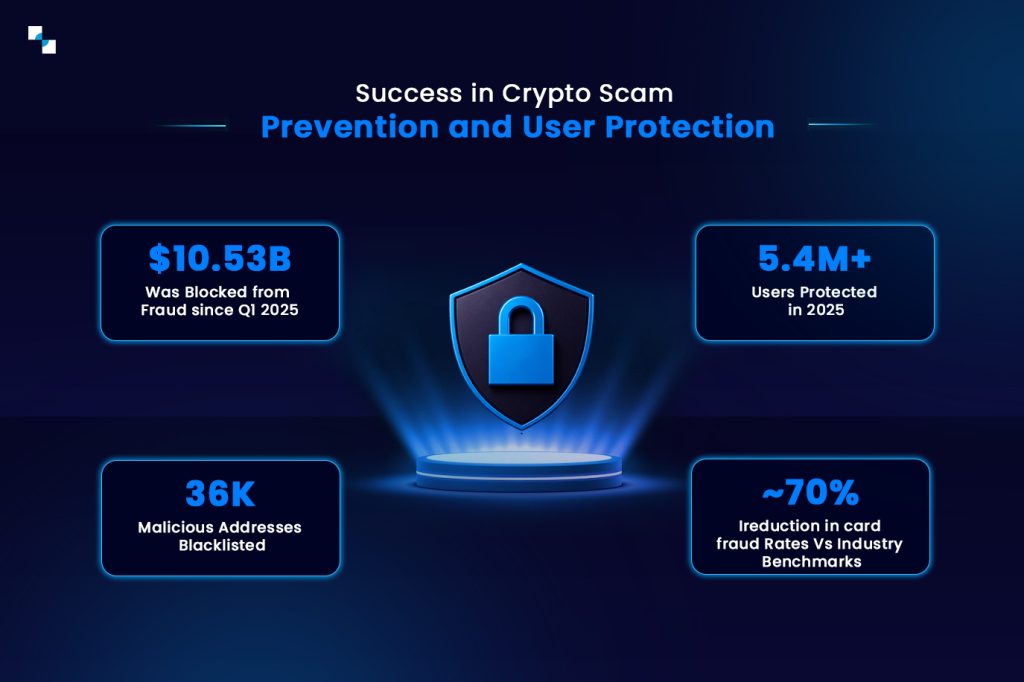
- AI-Generated Phishing at Scale: Binance’s 24+ AI initiatives and 100+ models intercepted 22.9 million attack attempts in the same period. Defending against volume at this scale requires robust automated detection infrastructure, and not manual review.
- Deepfake-Based Identity Fraud: AI-generated deepfakes are bypassing video KYC checks at licensed exchanges. Platforms operating under VARA, MiCA, or MAS are adding liveness detection layers to their KYC stack directly in response.
- AI Features Introduce Massive Post-Launch Overhead
- Infrastructure & Compute: AI matching features or trading bots require continuous GPU-backed inference infrastructure, which is a scaling operational cost, not a one-time build fee like matching engine development.
- API and Token Drainage: Cryptocurrency exchange software using OpenAI, Anthropic, or similar APIs for user-facing features inherit per-token costs that compound at scale. At 50,000 active users, a trading assistant making 10 API calls per session can run $15K-$40K per month.
- Model Maintenance and Retraining Cycles: AI models degrade as market conditions shift rapidly. A trading signal model trained on 2024 data performs poorly in 2026’s volatility environment. Retraining cycles including data acquisition, fine-tuning, validation, redeployment, etc. are recurring engineering costs with no equivalent in traditional exchange development.
- The AI Talent and Process Premium
- AI Talent Premium: ML engineers and AI systems architects command 40-60% higher rates than standard backend developers. Any crypto exchange software developer building proprietary AI features rather than integrating third-party APIs will charge at a structurally different price tier.
- Regulatory Compliance for AI Systems: The EU AI Act classifies certain AI-driven trading tools as high-risk systems, requiring documentation, transparency reports, human oversight mechanisms, and conformity assessments before deployment. For MiCA-licensed crypto exchange development, this adds a compliance workstream that didn’t exist before 2025.
- Extended QA and Backtesting: AI systems require backtesting across multiple market cycles, stress testing under adversarial inputs, and continuous monitoring post-launch. This adds 15-25% to QA scope on any exchange with AI trading features.
The Hidden Crypto Exchange Development Costs That No One Warns Founders About
- Post-Launch Audit Costs: One pre-launch audit is no longer enough to stop continuous, AI-assisted post-launch probing. The 2026 crypto exchange security standard requires a second full audit cycle 90 days post-launch to test code under live volume.
- Liquidity Bootstrapping: Market maker agreements, LP fees, and working capital reserves add +$50K-$200K to the real deployment cost. Without this, your order books will be empty on day one.
- Sequential Compliance Scope: Expanding mid-build from one jurisdiction to two (e.g., matching VARA and MiCA sequentially) costs 40-60% more than building a multi-jurisdictional crypto exchange compliance architecture from day one.
- KYC Per-Transaction Volume: While integration setup is a one-time $10K-$30K fee, the volume-based cost ($0.50-$5.00 per user) scales aggressively. At just 10,000 users, identity verification adds an ongoing $5K-$50K overhead.
- The Mobile App: The iOS and Android frontends are rarely included in basic exchange software quotes. Budgeting for mobile requires a separate track costing +$40K-$120K, alongside its own independent audit requirements.
- Post-2026 Security Scopes: If your crypto exchange software project was quoted before May 2026, it is missing the mandatory MPC wallet layers, multi-DVN bridge setups, AI trading features, and AI threat mitigation strategies required to counter modern exploits.
How Much Does it Cost to Launch Your Crypto Exchange Software: The Real Data for UAE, EU, Singapore & US
Here are three anonymized build cost estimates shared for Antier’s projects in the UAE, EU, and dual licensing for Singapore and the US. It includes the original budget, final cost, what drove the variance, and how April 2026’s security shift would affect a comparable build quoted today.
- VARA-Compliant White Label CEX, UAE
A regional fintech at Series A, entering the UAE market with a centralized, VARA-ready white label crypto exchange, bilingual Arabic/English interface, and custom liquidity integration.
Timeline: 11 weeks
Total cost: $67K build + $48K compliance support = $115K
Budget distribution:
- 35% compliance
- 28% UI customization
- 22% liquidity integration
- 15% QA & security
What drove the variance: VARA issued new guidance on custody requirements mid-project, expanding compliance scope by $12K
2026 note: A comparable build scoped today adds approximately $35K for MPC wallet architecture and AI threat detection. Antier now includes both as standard scope on all UAE crypto exchange software builds.
- Institutional CEX, US + Singapore Dual Licensing
An established fintech expanding into digital assets, requiring a full custom exchange stack with FIX protocol integration (the Financial Information eXchange protocol standard used by institutional trading firms), institutional KYC tier, and dual-jurisdiction licensing support across FinCEN and MAS.
Timeline: 14 months
Total cost: $780K
Budget distribution:
- 30% licensing & legal support
- 25% matching engine & infrastructure
- 20% security
- 15% custody
- 10% compliance systems
2026 note: AI threat detection and the second post-launch audit cycle are now standard. A comparable build today is $850K–$950K. Antier now recommends these security mechanisms by default in their MAS-ready white label crypto exchange software.
- Custom DEX, Multi-Chain, EU (MiCA)
A bootstrapped Web3 startup building a custom AMM across Ethereum, Arbitrum, and Solana, with MiCA-aligned KYC integration for a fiat on-ramp.
Timeline Quoted: 7 months
Total cost quoted: $195K
Budget distribution:
- 40% smart contract development & audits
- 30% multi-chain integration
- 20% compliance
- 10% UI
What drove the variance: The first audit cycle identified a re-entrancy vulnerability (a smart contract attack where a malicious contract repeatedly calls back into the original before the first execution completes, draining funds) in the AMM logic. Fixing it and completing a second audit added $22K to the crypto exchange development cost.
2026 note: Multi-DVN configuration on all three chain bridges is now a mandatory scope. An equivalent build today would cost approximately $230K.
- Fiat-Enabled Localized Exchange, Central Asia
A seasoned fintech operator launching a regional, compliance-ready crypto exchange software infrastructure across Central Asia, focused on bridging fragmented fiat infrastructure with deep, aggregated global liquidity pools.
Timeline: 6 months
Total cost: $145K
Budget distribution:
- 30% Fiat gateway & multi-payment rails integration
- 25% Liquidity aggregation & matching engine setup
- 20% Institutional custody & wallet infrastructure
- 15% Localized multi-lingual UI/UX & onboarding
- 10% Compliance systems & automated KYC/AML
What drove the variance: Local payment gateways updated their settlement APIs mid-build, requiring custom webhook configurations and localized settlement logic that extended the fiat rail integration by 3 weeks and added $14K to the crypto exchange development budget.
2026 note: Given the region’s unique infrastructure constraints and rising regional threats, modern deployments now require multi-DVN bridge configurations and deepfake-resistant onboarding layers as part of standard operations.
Conclusion
You can’t compare the cryptocurrency exchange software development costs for 2025 and 2026 now. The reason is AI, which caused the thread environment to change drastically. The crypto exchange security infrastructure needs to operate responsibly to counter the AI-powered attacks. And that’s not all. The audit costs have increased since many crypto exchange developers now leverage AI to cut the delivery timelines. Building on outdated standards and cutting corners on security will only be detrimental to crypto exchanges.
Antier’s data across 200+ live deployments confirms a brutal reality that the line between an exchange that launches on budget and one that bleeds capital comes down to upfront scoping. In the 2026 threat landscape, failing to map out non-negotiable security layers before writing code is the fastest way to trigger catastrophic mid-build cost overruns.
Get a free component-level crypto exchange development cost estimate now.
Frequently Asked Questions
01. How much does it cost to build a crypto exchange from scratch in 2026?
Drawn from Antier’s deployments across 200+ live crypto exchange software builds, costs range from $45K for a white label DEX to $1.3M+ for a fully custom institutional CEX with dual-jurisdiction compliance and current-standard security infrastructure. The right number for your build depends on exchange type, target jurisdictions, required features, and build method.
02. Why are crypto exchange development costs higher in 2026 than previous years?
Two compounding factors: first, the April 2026 breach wave including the Drift Protocol ($285M) and KelpDAO ($292M) incidents demonstrated that pre-2026 security architecture is insufficient against current attack methodologies. Second, AI has lowered the cost of attacking exchanges to $1.22 per smart contract, requiring new defense layers (MPC wallets, multi-DVN bridge configuration, AI threat detection) that add $15K–$150K to build scope depending on exchange type.
03. What is the minimum budget to launch a secure crypto exchange?
A white label DEX with current-standard security architecture can be launched for approximately $45K-$65K. Below that threshold, the security scope required to meet the 2026 baseline cannot be adequately funded. Exchanges launching on less are making a deliberate trade-off between speed-to-market and the protection of user funds.
04. How much has AI added to crypto exchange security costs?
Based on Antier's project data, AI-related security additions including MPC wallets, multi-DVN configuration, AI threat detection, AI agent sandboxing, and a second audit cycle, add $50K–$270K to crypto exchange development scope depending on build type. This is not optional: these layers exist specifically because AI has made attacks cheaper and faster, and exchanges that skip them are building to a standard that was already inadequate before April 2026.
05. What ongoing costs should I expect after my exchange launches?
Year-one post-launch operational costs typically run 40-60% of your build cost and include: security audit cycle 2 (90 days post-launch), compliance maintenance fees, KYC per-verification fees (which scale with user growth), liquidity management, infrastructure and cloud costs, and a dedicated support team. These costs are non-negotiable for any crypto exchange operating in a licensed jurisdiction.