


✨ AI Summary
- South Korea is paving the way for the modernization of national financial systems, moving away from outdated settlement models and towards a more efficient, digital infrastructure.
- The country has recently established a task force dedicated to tokenized government bonds, a move that signifies the broader strategy of modernizing sovereign debt markets through digital infrastructure and programmable financial assets.
- This shift has the potential to lower minimums and enable fractional ownership for retail and institutional investors, thus accelerating the adoption of digital assets.
- The focus is on redesigning financial infrastructure, rather than merely digitizing existing processes.
- This approach will improve settlement efficiency and operational transparency while remaining adaptable to future regulatory developments.
Government bond markets form the backbone of national financial systems, yet much of the supporting infrastructure continues to rely on settlement models that were designed for a different era. Manual reconciliation, multiple intermediaries, delayed settlement cycles, and fragmented operational workflows continue to increase costs for financial institutions while limiting market efficiency. As governments accelerate digital transformation initiatives, the focus is shifting from incremental improvements to structural modernization.
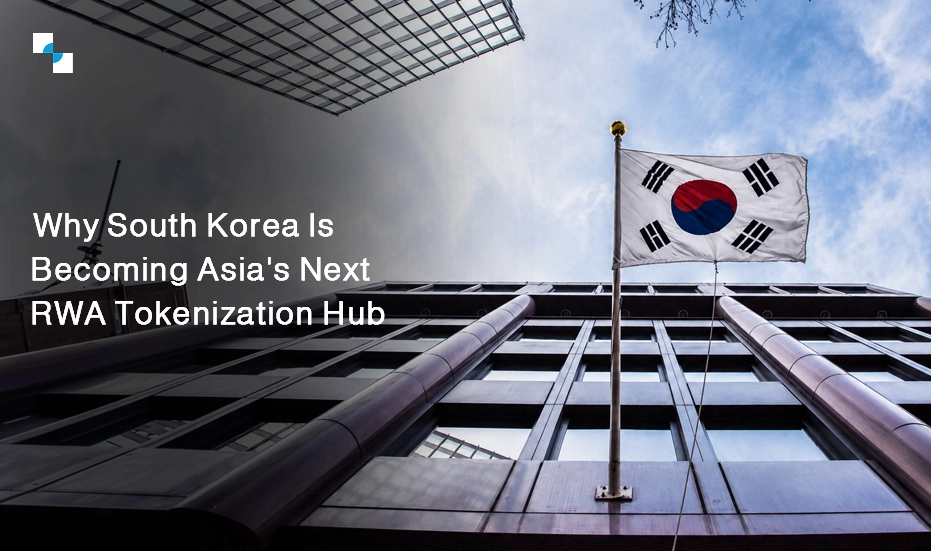
South Korea’s recent initiative to establish a dedicated task force for tokenized government bonds reflects this transformation. More than a regulatory milestone, it demonstrates how South Korea’s tokenization is becoming part of a broader strategy to modernize sovereign debt markets through secure digital infrastructure and programmable financial assets.
South Korea’s central bank has created a dedicated asset tokenization unit within its Digital Currency Division to move tokenization from research into operational policy, aligning with global peers commercializing digitized government bonds and following the Virtual Asset User Protection Act that took effect in 2024. The move could accelerate tokenized government bond pilots and broader digital asset adoption by lowering minimums and enabling fractional ownership for retail and institutional investors, while legal clarity, cybersecurity and cross-border interoperability remain key risks for crypto, DeFi and tokenized securities markets.
For decision makers, the implications extend well beyond blockchain adoption. Financial institutions are increasingly evaluating how tokenized securities can simplify issuance, automate compliance, improve settlement efficiency, and strengthen operational transparency. The objective is no longer to digitize existing processes alone, but to redesign financial infrastructure that is capable of supporting institutional scale, regulatory oversight, and long-term interoperability.
As regulatory frameworks mature, institutional asset tokenization is emerging as a practical approach for governments, banks, and investment institutions seeking to create more resilient and accessible capital markets. Countries that establish scalable digital infrastructure today are likely to shape the standards that define tomorrow’s financial ecosystem.
This evolution also creates a new strategic imperative for technology leaders. Rather than asking whether tokenization will influence capital markets, organizations are assessing how quickly they can develop compliant platforms capable of supporting digital securities, programmable settlement, and secure asset lifecycle management.
This article explores why South Korea’s latest initiative deserves global attention, how tokenized government bonds are redefining sovereign debt markets, and what organizations should consider while building enterprise-ready tokenization infrastructure through modern enterprise tokenization solutions.
Why Asset Tokenization in South Korea Is Accelerating Institutional Financial Innovation
South Korea’s latest initiative represents a notable shift in how governments approach financial modernization. Instead of viewing tokenization as a standalone innovation project, policymakers are integrating digital assets into the broader financial ecosystem. This approach reflects a long-term commitment to improving efficiency, transparency, and resilience across public capital markets while maintaining regulatory integrity.
Government bond markets involve numerous participants, including issuing authorities, custodians, financial institutions, investors, and regulatory bodies. Coordinating these stakeholders through conventional infrastructure often results in operational delays, duplicated reconciliation efforts, and higher administrative costs. Asset tokenization in South Korea seeks to address these challenges by enabling digitally native financial assets that automate core processes throughout the investment lifecycle.
Smart contracts introduce programmable functionality into sovereign debt instruments, allowing predefined rules to govern issuance, ownership transfers, coupon payments, compliance verification, and redemption. Automation reduces manual intervention while increasing consistency across transaction workflows. For institutional participants, this translates into greater operational certainty and improved resource utilization.
The growing interest in RWA tokenization in South Korea also reflects the broader evolution of regulated digital finance. Governments are no longer evaluating blockchain solely as an emerging technology. Instead, they are exploring how distributed ledger infrastructure can support trusted financial ecosystems capable of handling high-value institutional assets.
Did You Know?
Tokenized government bonds can automate multiple post issuance processes, including settlement validation, ownership updates, coupon distribution, and compliance verification, significantly reducing operational dependencies on manual processing.
Another defining aspect of South Korea’s strategy is its emphasis on interoperability. Rather than creating isolated blockchain applications, the initiative focuses on infrastructure that can support multiple categories of regulated digital assets under a unified operational framework. This approach improves scalability while reducing fragmentation across financial markets.
For financial institutions evaluating long-term digital transformation, enterprise asset tokenization services are becoming increasingly important. Successful implementation depends on far more than blockchain deployment. Institutions require integrated compliance systems, digital identity management, secure custody, smart contract governance, enterprise security, and seamless connectivity with existing financial infrastructure.
The modernization of sovereign debt also introduces broader opportunities for innovation across capital markets. Tokenized financial assets enable institutions to redesign operational models, improve liquidity management, simplify reporting obligations, and strengthen investor confidence through transparent and immutable transaction records.
This explains why the tokenization platform in South Korea has become a subject of growing interest among financial institutions worldwide. Rather than responding to short-term market trends, organizations are studying how government-backed initiatives can establish scalable frameworks for institutional digital finance that remain compliant, secure, and adaptable to future regulatory developments.
As more jurisdictions begin exploring sovereign asset tokenization, South Korea’s infrastructure-first approach provides valuable guidance for governments and enterprises alike. Institutions that begin preparing today will be better positioned to capitalize on emerging digital capital markets while building resilient platforms designed for long-term institutional adoption.
Consult Our Tokenization Specialists
How Asset Tokenization in South Korea Is Reshaping Government Bond Markets
Government bonds remain one of the most trusted investment instruments for governments, institutional investors, and financial institutions. However, the infrastructure supporting these assets has struggled to keep pace with the digital transformation taking place across financial markets. Settlement often involves multiple participants, ownership records are maintained across separate systems, and post trade activities require significant operational effort. These inefficiencies increase costs while slowing the movement of capital across markets.
South Korea’s recent initiatives indicate that asset tokenization in South Korea is being viewed as a practical solution to these long-standing challenges. Rather than replacing sovereign bonds, tokenization transforms how they are issued, managed, transferred, and settled throughout their lifecycle. By representing government securities as programmable digital assets, institutions can improve operational efficiency without compromising regulatory oversight or investor protection.
Unlike traditional digital records, tokenized government bonds embed predefined business logic within smart contracts. This enables automated execution of activities such as issuance, ownership transfers, coupon payments, maturity processing, and compliance verification. As a result, many administrative processes that previously depended on manual intervention can be executed more consistently while maintaining complete transparency across the transaction lifecycle.
| Traditional Government Bonds | Tokenized Government Bonds |
| Settlement involves multiple operational steps | Settlement can be executed through programmable workflows |
| Ownership records maintained across separate systems | Unified digital ownership records |
| Manual reconciliation between institutions | Automated reconciliation through blockchain |
| Limited flexibility in transfers | Programmable ownership transfers |
| Multiple reporting processes | Real time auditability |
| Higher operational overhead | Reduced administrative complexity |
Why Financial Institutions Are Reassessing Government Bond Infrastructure
The value of tokenization extends well beyond digitizing certificates or replacing paper-based records. It introduces an entirely different operating model where the asset itself carries programmable rules governing how it is issued, transferred, and managed.
This evolution is evident across South Korea tokenization initiatives, where policymakers are exploring digital financial infrastructure capable of supporting government bonds alongside other regulated digital assets. Such an approach creates a stronger foundation for future capital markets while ensuring interoperability across multiple financial products.
For banks, institutional investors, and public agencies, this transformation offers several strategic advantages.
Faster Settlement
Programmable transactions reduce unnecessary delays by enabling predefined settlement conditions to execute automatically once contractual requirements have been fulfilled.
Improved Transparency
Every authorized transaction is securely recorded, creating an immutable audit trail that simplifies governance, regulatory reporting, and institutional oversight.
Automated Compliance
Compliance rules can be incorporated directly into smart contracts, allowing investor eligibility, transfer restrictions, and reporting requirements to be validated automatically during every transaction.
Lower Operational Costs
Automation minimizes repetitive administrative activities associated with reconciliation, servicing, and transaction processing, allowing institutions to allocate resources toward strategic initiatives.
Greater Market Accessibility
Digital ownership structures create opportunities to support broader investor participation while maintaining regulatory controls appropriate for institutional financial markets.
These advantages explain why governments are increasingly viewing tokenization as a modernization strategy rather than a technology initiative. The objective is to build infrastructure capable of supporting future financial markets while improving efficiency across existing operations.
The momentum surrounding RWA tokenization in South Korea further reinforces this shift. Governments are beginning to recognize that blockchain can serve as foundational financial infrastructure capable of supporting regulated digital assets, sovereign securities, and programmable financial services within a unified ecosystem.
Great. This next section is where we should pivot from education to buyer intent. Instead of listing platform features, the content should explain why each component matters for an institutional deployment, making it much more valuable for enterprise readers and naturally positioning Antier’s expertise.
Core Components for Enterprise Adoption
As governments and financial institutions move beyond tokenization pilots, technology decisions become increasingly critical. Launching a tokenized government bond platform requires far more than issuing digital tokens on a blockchain. Institutions must establish an ecosystem that supports regulatory compliance, operational resilience, cybersecurity, interoperability, and seamless integration with existing financial infrastructure.
Organizations evaluating a tokenization platform in South Korea should therefore prioritize enterprise readiness from the outset. Every layer of the platform must support institutional governance while ensuring that digital assets can be issued, managed, transferred, and monitored securely throughout their lifecycle.
Smart Contract Infrastructure
Smart contracts serve as the operational foundation of every tokenized government bond platform. They automate business rules governing bond issuance, coupon payments, ownership transfers, maturity processing, and redemption while reducing reliance on manual intervention.
However, institutional smart contracts require significantly higher standards than conventional blockchain applications. They must undergo extensive testing, security validation, upgrade planning, and governance reviews before deployment to ensure reliability throughout the asset lifecycle.
A well-designed smart contract framework not only improves operational efficiency but also strengthens trust among regulators, financial institutions, and investors by ensuring that every transaction follows predefined rules with complete transparency.
Digital Asset Issuance and Lifecycle Management
Issuing tokenized government bonds involves much more than creating digital representations of financial assets. Institutions require structured workflows that govern issuance approvals, asset configuration, ownership records, coupon schedules, maturity events, and redemption procedures.
This is where enterprise asset tokenization services become increasingly valuable. Enterprise-grade issuance engines provide standardized processes that simplify asset creation while maintaining consistency across the entire investment lifecycle. By centralizing lifecycle management, institutions can reduce operational complexity and improve governance over regulated digital securities.
Digital Identity and Investor Onboarding
Institutional financial markets operate within strict regulatory frameworks that require participant verification before transactions can occur. Identity verification therefore becomes an essential component of any government bond tokenization platform.
A secure onboarding framework should support digital identity validation, investor classification, permission management, and regulatory documentation while creating a seamless experience for authorized participants.
Effective identity management also strengthens operational security by ensuring that only eligible investors can access specific asset classes according to applicable regulatory requirements.
Organizations pursuing Institutional asset tokenization increasingly recognize that digital identity is not simply a compliance requirement. It is a foundational element that enables trusted participation across regulated digital capital markets.
Compliance Automation
Regulatory compliance cannot remain a separate operational process within tokenized financial ecosystems. Instead, compliance requirements should be embedded directly into transaction workflows.
Modern tokenization platforms integrate automated verification mechanisms capable of enforcing transfer restrictions, investor eligibility rules, transaction monitoring, reporting obligations, and audit requirements in real time.
Embedding compliance into platform architecture reduces administrative workloads while improving consistency across every transaction executed within the ecosystem. This approach enables financial institutions to respond more effectively to evolving regulatory expectations without disrupting operational efficiency.
Institutional Digital Custody
Secure custody remains one of the most important considerations when managing tokenized government bonds. Digital assets require institutional-grade protection that combines secure key management, controlled access, disaster recovery planning, and governance policies designed specifically for regulated financial environments.
Unlike retail custody models, institutional custody infrastructure supports multiple authorization layers, operational segregation, recovery mechanisms, and continuous monitoring to safeguard high-value financial assets.
The growing adoption of RWA tokenization in South Korea reinforces the importance of secure custody as governments and financial institutions prepare for broader participation in regulated digital asset markets.
Secondary Market Integration
Issuing tokenized bonds represents only the beginning of the asset lifecycle. Long-term value depends on the ability to facilitate efficient transfers between authorized market participants while maintaining regulatory oversight.
A modern tokenization platform should therefore integrate secondary trading capabilities that support compliant ownership transfers, transparent transaction records, and automated settlement processes.
When secondary market functionality is incorporated from the beginning, institutions can improve liquidity while creating more dynamic investment ecosystems that remain aligned with regulatory expectations.
Enterprise Integration and Interoperability
Financial institutions rarely operate through standalone technology platforms. Core banking systems, treasury operations, risk management platforms, reporting applications, and compliance tools must all function together within a unified operational environment.
For this reason, interoperability has become one of the defining characteristics of successful enterprise tokenization solutions. APIs, middleware, standardized data models, and secure integration frameworks enable tokenization platforms to exchange information efficiently with existing enterprise systems while minimizing operational disruption.
Interoperability also prepares institutions for future innovation by allowing additional digital asset classes to be introduced without redesigning core infrastructure.
Analytics, Reporting, and Governance
Institutional decision makers require complete visibility into platform activity, asset performance, transaction history, compliance events, and operational health.
Advanced reporting capabilities provide real-time insights that support investment decisions, regulatory reporting, audit preparation, and risk management. Governance dashboards further enhance oversight by enabling institutions to monitor asset life cycles, participant activity, and platform performance through centralized controls.
As governments continue modernizing financial infrastructure, organizations investing in South Korea’s tokenization initiatives are increasingly prioritizing governance capabilities alongside technological innovation. Strong reporting frameworks not only strengthen operational transparency but also reinforce institutional confidence in digital financial ecosystems.
Building for Long-Term Institutional Success
A successful government bond tokenization platform is not defined by blockchain technology alone. Its success depends on the ability to combine secure architecture, regulatory compliance, operational governance, interoperability, and lifecycle automation into a unified enterprise ecosystem.
Institutions that approach tokenization as long-term financial infrastructure rather than a technology deployment will be better positioned to support future regulatory requirements, expand digital asset offerings, and participate confidently in the next generation of capital markets.
Planning a Government Bond or RWA Tokenization Platform? Let’s Build It Together.
Transform Institutional Vision into Reality with Enterprise Asset Tokenization Services
South Korea’s government bond tokenization initiative demonstrates that institutional finance is entering a new phase where digital assets are becoming an integral part of modern financial infrastructure. As regulatory frameworks mature and governments continue exploring programmable securities, financial institutions have an opportunity to move beyond legacy systems and build platforms that deliver greater transparency, operational efficiency, and long-term scalability. Organizations that invest early in secure, compliant, and interoperable tokenization ecosystems will be better positioned to meet evolving market expectations while unlocking new models of capital formation and digital asset management.
This is where Antier serves as a trusted technology partner. With deep expertise in enterprise asset tokenization services, Antier enables financial institutions, banks, asset managers, and public sector organizations to design, develop, and deploy enterprise-grade tokenization platforms tailored to regulatory and business requirements. From blockchain architecture and smart contract engineering to digital asset issuance, compliance integration, institutional custody, and lifecycle management, Antier delivers comprehensive enterprise tokenization solutions that support secure and scalable digital finance. Whether the objective is to launch a sovereign bond platform, digitize real-world assets, or accelerate institutional asset tokenization, Antier provides the technical expertise and strategic guidance required to build future-ready financial infrastructure with confidence.
Frequently Asked Questions
01. What are the main challenges facing government bond markets today?
Government bond markets face challenges such as manual reconciliation, multiple intermediaries, delayed settlement cycles, and fragmented operational workflows, which increase costs and limit market efficiency.
02. How is South Korea addressing the modernization of its government bond market?
South Korea is establishing a dedicated task force for tokenized government bonds and has created an asset tokenization unit within its central bank to transition from research to operational policy, aiming to modernize sovereign debt markets.
03. What are the potential benefits of tokenized government bonds for investors?
Tokenized government bonds could lower investment minimums, enable fractional ownership, and enhance market accessibility for both retail and institutional investors, while improving settlement efficiency and operational transparency.