




✨ AI Summary
- Asset tokenization is gaining momentum, with the market projected to grow from $2.1 trillion in 2026 to $24.5 trillion by 2033.
- However, navigating this field can be challenging for businesses due to several factors, including selecting a technology partner, legal structuring, and compliance management.
- This blog examines five top asset tokenization companies of 2026, providing insights into different aspects of the tokenization value chain.
- 1.
- Antier Solutions provides end-to-end asset tokenization services, supporting multiple jurisdictions and asset classes, and offering long-term platform support.
Decision makers evaluating asset tokenization ecosystems rarely struggle with the underlying concept. The difficulty begins once a business has to select a technology partner, agree on a legal structure, and commit to a rollout plan capable of withstanding regulatory scrutiny. Boards ask direct questions before any tokenization initiative receives approval. Who holds legal title to the underlying asset once it is represented on a distributed ledger. How is investor eligibility verified before a token changes hands. What happens if a jurisdiction revises its position on digital securities midway through a program. None of these are hypothetical concerns. They are the questions that separate a platform built to survive its first audit from one that was never designed to. For enterprises navigating these requirements, evaluating institutional asset tokenization companies can help identify technology partners equipped to address regulatory, compliance, and infrastructure considerations at scale.
This blog sets out how the market for tokenization has changed, the categories of firms now active within it, and a closer look at five companies worth understanding before any procurement conversation begins. Tokenization is treated here as a discipline spanning legal structuring, platform engineering, and long-term compliance management rather than a single service line. Anyone comparing asset tokenization development companies against a general-purpose blockchain vendor will notice the difference within the first conversation, usually in how each side frames the questions being asked. The sections that follow move from market context to company profiles to a practical view of cost, in that order, so a reader can stop at whichever point answers the question they came with. This also provides a practical basis for evaluating asset tokenization companies.
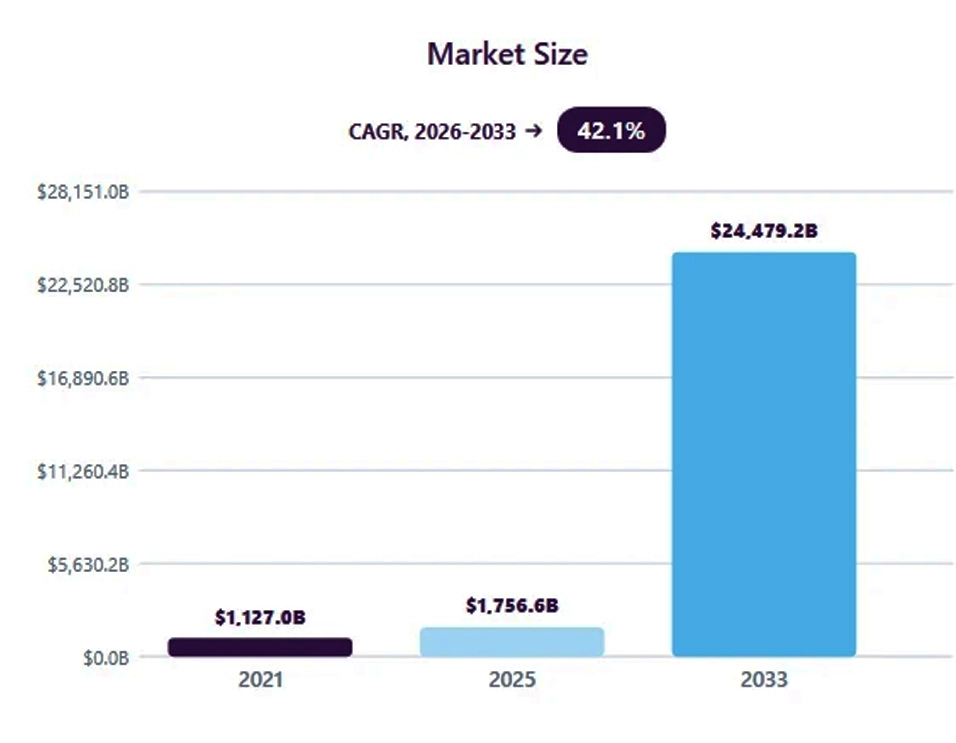
The global asset tokenization market size was valued at USD 1.8 trillion in 2025 and is projected to grow from USD 2.1 trillion in 2026 to USD 24.5 trillion by 2033, at a CAGR of 42.1% from 2026 to 2033. The market in North America dominated with a revenue share of 38.4% in 2025. The rapid adoption of blockchain and distributed ledger technology is driving the growth of the asset tokenization industry.
Treating Asset tokenization platform development as a template exercise remains one of the more common and costly mistakes enterprises make when entering this space. In evaluating asset tokenization companies 2026, enterprises must consider whether the underlying architecture can support evolving asset classes, regulatory requirements, and investor needs.
A structure that performs well for a single-asset pilot rarely scales cleanly to a multi-asset program without a deliberate rethink of the underlying architecture, and that rethink is easier to plan for early than to retrofit later. Enterprises that approach the market this way tend to avoid the rework that comes from choosing infrastructure suited to one asset class and later needing to support another.
- Asset type determines the underlying structure that gets used, since fractional ownership behaves differently from a debt-like instrument, and an equity-like instrument carries its own reporting expectations that neither of the other two share.
- Investor geography determines which securities exemptions or licensing regimes come into play, and a platform built for a single investor base can require meaningful rework the moment it is opened to investors in a second region.
- Custody arrangements differ sharply between physical assets, financial instruments, and hybrid structures that combine both, which means the custody model has to be settled before the token design is finalized rather than adjusted after the fact.
- Secondary market rules vary by exchange and by regulator, which shapes how liquidity should be designed from the outset. A platform built without this in mind often finds investors can acquire a token but cannot easily exit their position later.
- Reporting obligations differ by asset class as well, and a platform that treats reporting as an afterthought tends to create friction for investors who expect the same transparency they would receive from a traditional instrument.
Types of Companies Driving Asset Tokenization
Not every firm that claims tokenization expertise offers the same service. Some operate as protocol builders, maintaining the underlying token standards and the smart contract logic that governs them. Others function as issuance platforms, handling investor onboarding, cap table management, and distribution once a token is live.
A smaller group works as full development partners, designing and building a client’s own branded platform from the ground up. These asset tokenization development companies are typically evaluated on architecture, customization, compliance, and long-term platform ownership. Understanding which category a firm belongs to is the first filter a decision maker should apply, well before any technical evaluation begins in earnest. Working with an asset tokenization development company that fits the right category matters far more than working with whichever name happens to be most visible in the market at a given moment. A firm that excels at issuance may have little experience building a dedicated platform, and a firm skilled at platform architecture may not be the right choice for a business that only needs distribution support. This distinction is particularly important when shortlisting the top asset tokenization companies.
- Protocol and standard providers maintain the token frameworks that govern transfer restrictions and compliance logic, and most issuers build on top of one of these frameworks rather than writing compliance logic from first principles.
- Issuance and distribution platforms manage the investor-facing side of an offering, from onboarding through ongoing reporting, and are often the right fit for a business that wants to issue quickly without operating its own platform.
- Full-service development partners design and build a dedicated, white-label platform tailored to one business rather than a shared marketplace, which suits enterprises planning a long-term tokenization program rather than a single offering.
- Advisory and structuring firms concentrate on legal and regulatory scaffolding, often working alongside a technical partner rather than in place of one, and are useful when the legal structure is more complex than the technology itself.
- Some firms blend more than one of these roles, and a decision maker should ask directly which parts of an engagement a firm actually owns versus which parts get handed off to a subcontractor without disclosure.

Top 5 Asset Tokenization Companies of 2026
The companies profiled here are chosen to represent distinct points along the tokenization value chain rather than five variations of the same offering. Together, these firms provide a useful reference for comparing asset tokenization companies 2026. Each operates at a different layer of the stack: protocol and token-standard infrastructure, institutional issuance and cap table administration, investor-facing product design, compliance enforcement embedded at the smart contract level, and the bridge between tokenized assets and on-chain liquidity.
Evaluating them side by side surfaces a distinction that a generic vendor list tends to obscure, namely that “tokenization company” is not a single category of service. A business structuring a real estate offering through a special purpose vehicle has different technical and regulatory requirements than a fund manager issuing a security token, and neither resembles a protocol maintaining transfer-restriction logic on behalf of third-party issuers. None of the descriptions that follow reference internal figures or third-party client relationships, since a procurement decision should rest on architectural and regulatory fit rather than on borrowed credibility. Reading all five before narrowing a shortlist, and mapping each one against your own asset class, jurisdiction, and compliance model, tends to produce a far more defensible outcome than evaluating a single company in isolation.
1. Antier
Antier operates as one of the top asset tokenization companies, working directly with enterprises that want to own their platform outright rather than issue tokens through a shared marketplace controlled by someone else. Engagements typically begin with structuring guidance and continue through deployment and long-term platform support, which keeps legal, compliance, and technical decisions aligned throughout the build instead of split across separate vendors.
- Builds dedicated, white-label platforms rather than routing clients through a shared issuance system, which means the client’s brand, investor relationships, and platform data remain under the client’s own control throughout.
- Structures engagements to accommodate multiple jurisdictions, including frameworks common across the UAE, the EU, and Singapore, so a platform built for one market can extend into another without a ground-up rebuild.
- Supports deployment across multiple blockchain networks so clients are not locked into a single chain, which matters as investor and liquidity preferences continue to shift across ecosystems over time.
- Works across real estate, gold, and fund-based tokenization rather than a single asset category, allowing one engagement to expand into additional asset classes as a client’s program grows.
- Involves the same team from early structuring conversations through post-launch support, which reduces the handoffs that often slow a program down once it moves from planning into execution.
2. Securitize
Securitize positions itself as an institutional tokenization infrastructure provider, concentrated on the mechanics of issuing and administering tokenized securities. This makes it relevant when comparing institutional asset tokenization companies focused on regulated digital securities. As one of the top asset tokenization companies, its platform is built around workflows that institutional issuers already expect, including cap table management, investor accreditation checks, and the ongoing reporting obligations that accompany regulated instruments.
- Concentrates on institutional-grade fund and securities tokenization rather than general-purpose token issuance, shaping the platform around the reporting and administration standards institutional issuers already expect.
- Maintains infrastructure designed to operate across more than one blockchain network, giving issuers flexibility in where a token is ultimately deployed and held.
- Built around compliance workflows that closely mirror traditional securities administration, so moving from a conventional offering to a tokenized one requires less operational change than it might elsewhere.
- Positions itself primarily as infrastructure for issuers rather than as a development partner building a fully custom platform, which suits a business that wants proven rails rather than a bespoke build.
3. Ondo Finance
Ondo Finance approaches tokenization from the investor access side, building products that bring traditional fixed income and equity exposure on chain. Rather than functioning primarily as a development partner for enterprises, it operates its own suite of tokenized instruments, which makes it a useful reference point for how investor-facing tokenized products tend to be structured in practice.
- Focuses on government securities and equity-linked tokenized products, placing it closer to the investor-facing end of the market than to the enterprise development side.
- Designed around yield-bearing instruments rather than physical asset tokenization, making it a more relevant reference for financial instruments than for assets such as real estate or gold.
- Demonstrates how tokenized products can be structured for direct investor access rather than enterprise deployment, offering a useful model for how a finished tokenized product ultimately reaches an investor.
- Operates its own suite of products rather than building custom platforms for outside clients, a meaningful distinction for a business evaluating it as a potential development partner.
4. Tokeny
Tokeny operates at the standards and compliance layer of tokenization, maintaining the permissioned token framework that many issuers build on top of. Its focus sits less on any single asset class and more on ensuring that transfer restrictions, investor whitelisting, and eligibility rules are enforced automatically at the smart contract level rather than left to manual review.
- Maintains a widely referenced permissioned token standard used across multiple issuers, giving them a common framework rather than a proprietary one that locks a single vendor in place.
- Embeds compliance logic directly into the token rather than relying solely on external checks, reducing the chance of a transfer occurring outside permitted investor criteria.
- Frequently supports SPV-backed asset tokenization structures that call for strict transfer controls, since the standard was designed with regulated, permissioned assets in mind from the outset.
- Sits closer to the infrastructure and standards layer than to full platform development, making it a natural fit for issuers who already have a platform partner and need the compliance layer underneath it.
5. Centrifuge
Centrifuge focuses on connecting real-world assets, particularly private credit, to decentralized finance liquidity. Its role has less to do with issuing tokens for a single enterprise and more to do with building the infrastructure that lets tokenized assets serve as collateral within on-chain lending markets, an angle that few other firms in this list treat as their primary focus.
- Concentrates on private credit and receivables rather than physical assets such as real estate or gold, which sets it apart from the other firms covered here.
- Built to connect tokenized assets with decentralized lending markets, giving issuers a route to liquidity that does not depend on a traditional secondary market.
- Offers a useful reference point for enterprises exploring Real-world asset tokenization as a liquidity tool rather than only a fundraising mechanism, since its model treats tokenized assets as collateral rather than as a static holding.
- Operates primarily within decentralized finance infrastructure rather than as an enterprise platform builder, worth noting for a business expecting a fully managed, white-label build.
How Much Does It Cost to Build an Asset Tokenization Platform
Cost is almost always the first question a decision maker raises, and almost always the wrong question to lead with. The eventual cost of an asset tokenization platform development engagement is shaped by a handful of decisions made well before any development contract is signed, and those decisions are what actually deserve attention early in the process rather than the final number itself. For enterprises evaluating institutional asset tokenization companies, factors such as regulatory scope, infrastructure requirements, asset complexity, and long-term scalability should therefore be assessed alongside development costs.
- Asset class complexity: a single real estate property is simpler to structure than a diversified fund holding mixed instruments, since each additional instrument type can carry its own compliance and reporting requirements.
- Jurisdictional scope: supporting investors across multiple regulatory regimes adds both legal and technical overhead, particularly when eligibility rules differ meaningfully from one region to the next.
- Legal structuring: whether an engagement uses direct token issuance or an SPV-backed asset tokenization arrangement changes both timeline and cost, since a special purpose vehicle introduces its own formation and ongoing administration requirements.
- Chain and infrastructure choice: multi-chain support and custody integrations add engineering scope that a single-chain build would not require, and the choice often depends on where the target investor base already operates.
- Ongoing compliance and reporting: platforms built for long-term investor reporting are priced differently than a one-time token issuance, since the former needs infrastructure that keeps working long after launch rather than infrastructure built for a single event.
- Integration needs: connecting a platform to existing systems, such as investor portals or internal reporting tools, is a scope decision that is often underestimated until the build is already underway.
Build an Enterprise Ready Asset Tokenization Platform
The Antier Advantage in Asset Tokenization
Antier approaches every engagement as a long-term platform relationship rather than a single transaction. Our work spans early structuring conversations, platform architecture, multi-chain deployment, and the compliance scaffolding that keeps a platform defensible well after launch. This positioning places Antier among the best asset tokenization companies for enterprises seeking an end-to-end development partner. Businesses considering RWA tokenization services often evaluate vendors on visibility alone, when the more useful comparison is depth of engagement and jurisdictional experience across the markets a business actually intends to serve.
As an asset tokenization development company, Antier’s approach is built around ownership. Clients retain their own branded platform rather than issuing through a shared system controlled by a third party, and that distinction becomes most apparent once a program moves past its pilot phase and into ongoing operation. For a business ready to move beyond exploratory conversations, Antier’s team is positioned to structure, build, and support a tokenization platform suited to its specific asset class and regulatory environment, with the same team involved from the earliest structuring discussion through to post-launch operation.
FAQs
What types of real-world assets can be tokenized through an asset tokenization platform?
Real estate, private equity, bonds, commodities, art, collectibles, invoices, funds, and other tangible or financial assets can be represented as digital tokens. Top asset tokenization companies enable businesses to structure these assets for fractional ownership and compliant digital transfer.
How do asset tokenization companies differ from traditional blockchain development companies?
Asset tokenization companies 2026 typically combine blockchain infrastructure with asset structuring, compliance, custody, investor onboarding, and secondary-market capabilities. Traditional blockchain development companies may focus primarily on smart contracts, wallets, dApps, and blockchain infrastructure.
Which tokenization companies are good to invest in?
Investment decisions should consider regulatory standing, technology infrastructure, asset quality, market adoption, and long-term viability rather than rankings alone. Antier, among the best asset tokenization companies, focuses on enterprise-grade tokenization infrastructure, although investors should conduct independent due diligence before making investment decisions.
How do asset tokenization companies ensure the legal ownership of tokenized assets?
They connect on-chain token ownership with legally enforceable ownership records, contractual rights, and appropriate legal entities or custodial structures. Leading top asset tokenization companies also incorporate KYC/AML, transfer restrictions, and jurisdiction-specific compliance mechanisms.
How much does it cost to work with an asset tokenization company?
Costs vary based on asset complexity, blockchain selection, compliance requirements, smart-contract architecture, integrations, and secondary-market functionality. For asset tokenization companies 2026, enterprise-grade projects can range from a custom development engagement to a comprehensive end-to-end platform build.