


✨ AI Summary
- The blog post explores the concept of a white label tokenization platform as a solution to the complex process of asset tokenization.
- With the core process of putting an asset on a blockchain largely resolved, the focus is now on the tasks that follow, such as onboarding issuers, verifying investors, and maintaining secure asset holdings.
- A white label tokenization platform provides the foundation for these tasks, allowing businesses to get to market faster, while retaining control over the customer experience and operational model.
- However, the post also notes that such platforms are not plug-and-play; they must be configured to suit the specific needs of the business.
- The post further discusses what a white label tokenization platform entails, why businesses should consider launching one, and the steps to turn a tokenization business model into a ready-to-use platform.
Putting an asset on a blockchain is no longer the hard part. That problem has largely been solved. What separates a working tokenization business from a pilot that stalls is everything that happens after the token is minted.
Think about what a real platform has to handle: onboarding issuers, verifying investors, issuing tokens, enforcing compliance, moving money, holding assets securely, producing reports and, in many cases, supporting trading on a secondary market. For banks, asset managers, fintechs, real estate firms and digital asset ventures, all of these pieces need to work together, not as a patchwork of separate tools.
A white label tokenization platform gives you that foundation under your own brand, without building every component from scratch. You get to market faster, and you still own the customer experience and the operating model. That said, white label is not plug and play. The platform has to be configured around the assets you plan to tokenize, the jurisdictions you operate in, the investors you serve, the compliance rules you must follow and the way your business actually runs.
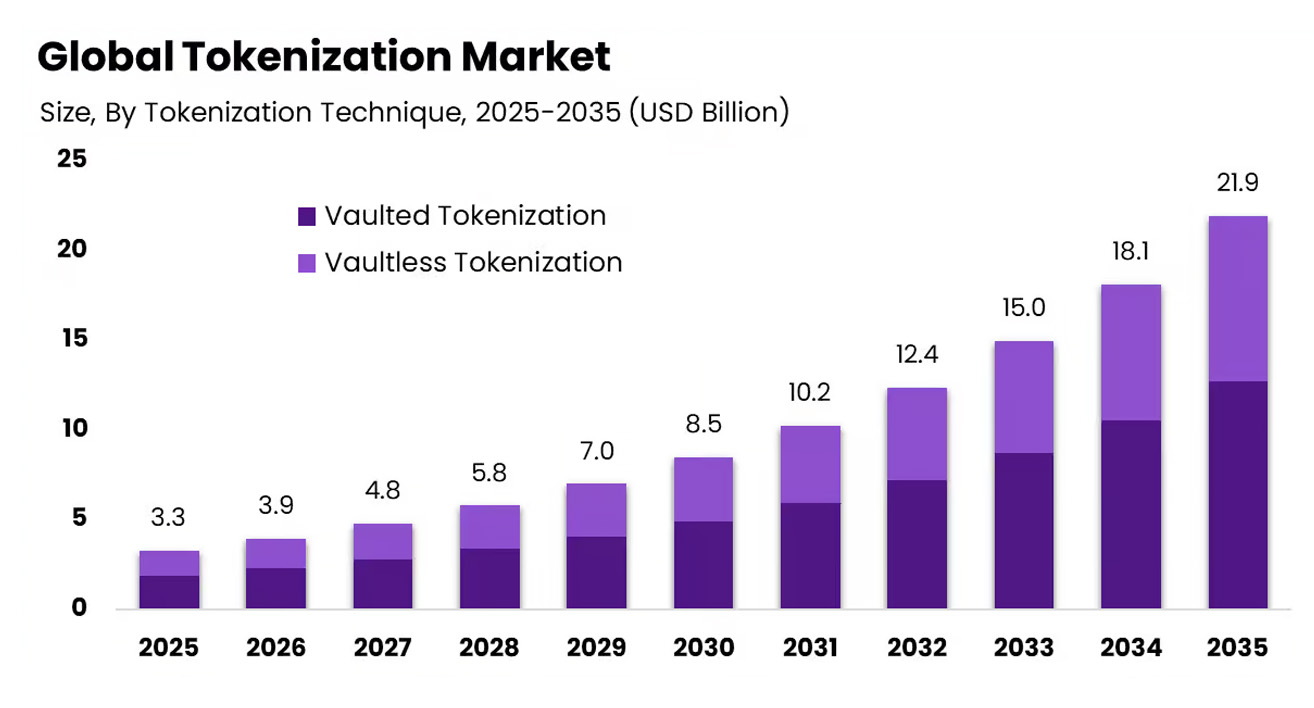
As institutional interest grows, architecture matters more than ever. Industry research continues to point to tokenization’s potential across financial assets, while flagging real challenges around regulation, interoperability, liquidity, custody and operational infrastructure. If you are planning a 2027 launch, the goal is simple to state and harder to execute: build for the issuance you need today, while leaving room for the assets, markets and regulations of tomorrow.
What Is a White Label Tokenization Platform?
A white-label RWA tokenization software is ready-built, customizable infrastructure that lets a business offer asset tokenization under its own name.
Rather than writing the entire stack in-house, you start from a proven base and configure or extend it to fit your needs. Typical modules include asset onboarding, issuer management, smart contracts, investor onboarding, compliance controls, wallet connectivity, payments, reporting and marketplace features.
The key distinction here is between real customization and a simple logo swap.
An enterprise platform often needs different investor eligibility rules for different asset classes. It needs separate workflows for issuers, administrators and investors. It may need to block transfers based on jurisdiction, investor status or the legal structure of the asset. A well-designed white label solution handles these requirements at the infrastructure level, not as afterthoughts.
It should also let you start small and grow. A platform launched for tokenized real estate, for example, should be able to take on funds, private equity, commodities or bonds later, without tearing out the foundation.
Source: https://market.us/report/tokenization-market/
Why Launch a White Label Tokenization Platform in 2027?
Tokenization is no longer just about issuing digital assets. Organizations are now looking at blockchain infrastructure for ownership management, settlement, transparency, distribution and lifecycle automation.
Building all of this internally takes expertise in blockchain engineering, financial technology, cybersecurity, compliance, backend systems and user experience. That is a significant investment before you have issued a single token.
Working with a white label tokenization platform development company lets you hand off the technology so your team can focus on what it does best: asset strategy, market positioning, regulatory structure and distribution.
Speed is only part of the benefit. A well-structured platform also reduces fragmentation across systems and gives you one shared infrastructure layer for every asset you tokenize.
There is a strategic angle too. Regulations will change. New token standards will appear. Investors will ask for new features, and issuers will bring new asset structures. A modular platform can absorb these changes far more easily than a narrowly built issuance app.
Turn Your Tokenization Business Model into a Production – Ready Platform
Step 1: Define Your Tokenization Business Model
Before making any technology decisions, get clear on the business.
Start with the assets. Real estate, private equity, funds, commodities and bonds each come with their own ownership structures, legal documents, investor requirements, valuation methods and distribution models.
Then work through the following:
- Target asset classes
- Issuer profiles you want to serve
- Investor categories
- Geographic markets
- Primary issuance model
- Distribution channels
- Secondary-market requirements
- Revenue model
- Custody approach
- Payment and settlement model
- Regulatory responsibilities
You will also need to decide whether the platform serves one issuer or many. A multi-issuer model adds requirements around tenant management, permissions, data separation, issuer onboarding and administrative controls.
This groundwork shapes the white label tokenization development services you actually need. Skip it, and you risk paying for features that don’t fit your model, or discovering critical gaps once development is already underway.
Step 2: Choose the Right Tokenization Architecture
Architecture decides how well your platform holds up as users, assets and transaction volumes grow. A complete tokenization ecosystem usually has seven connected layers.
Asset and Issuer Layer
Handles asset onboarding, issuer details, supporting documents, asset metadata, valuations and lifecycle records.
Tokenization Layer
The on-chain core. Smart contracts govern issuance, ownership, transfers, redemptions, distributions and other lifecycle events.
Compliance Layer
Manages identity verification, investor eligibility, jurisdictional restrictions, transaction monitoring and transfer controls.
Investor Layer
The interface investors use to register, get verified, browse assets, invest, track holdings and view transactions and distributions.
Payment and Settlement Layer
Connects the platform to fiat payment rails, stablecoins, banks, wallets, custodians and other settlement options.
Marketplace Layer
Where secondary trading is needed, this layer covers listings, order management, asset discovery, transfers and transaction processing.
Reporting Layer
Gives issuers and administrators visibility into assets, investors, transactions, distributions and compliance activity.
These layers shouldn’t run in isolation. How well they talk to each other determines how smoothly the platform supports the full asset lifecycle.
Step 3: Build the Regulatory and Compliance Framework
Compliance belongs in the architecture from day one. Bolting it on just before launch rarely ends well.
How a tokenized asset is regulated depends on the asset itself, its ownership structure, the jurisdiction, the offering model and the investor group. Your technology has to be able to enforce whatever controls that framework requires, and a capable white label tokenization platform development company should be able to turn those requirements into working platform workflows.
Core compliance capabilities typically include:
- KYC and KYB verification
- AML screening
- Investor eligibility checks
- Accreditation or qualification workflows
- Wallet whitelisting
- Jurisdiction-based restrictions
- Transfer restrictions
- Transaction monitoring
- Compliance records and audit trails
- Regulatory reporting
Token standards can help as well. ERC-3643, for instance, is built around permissioned transfers and identity-based controls, which makes it a strong fit for many regulated tokenization use cases.
Did you know? Compliance can be enforced both before and during a transaction. Investor verification decides who can participate in the first place, while transfer controls govern where tokens can move afterward.
In the end, your compliance setup should reflect the legal structure of each specific asset, not a one-size-fits-all template.
Step 4: Select Token Standards and Blockchain Infrastructure
Let your requirements choose the blockchain, not the other way around.
The right network depends on transaction needs, interoperability, custody arrangements, privacy, smart contract capabilities, network costs and regulatory controls. Different assets may also call for different token models. A fungible asset token has different needs from a permissioned security token, and a tokenized fund works differently from a real estate or commodity-backed token.
That is why good white-label RWA tokenization software offers flexibility at the token layer. Standards such as ERC-3643 and ERC-1400 are worth evaluating for regulated assets, and newer standards will keep emerging as the market matures.
Also weigh wallet compatibility, transaction finality, network reliability, smart contract security, integration options and long-term ecosystem support. Picking a chain just because it is popular can box you in later. Choose it for what your platform needs to do.
Step 5: Develop the Platform
With the business model and architecture locked in, development can begin. A production-grade platform brings several interfaces and backend systems together.
Admin Dashboard
One place for administrators to oversee users, issuers, assets, transactions, compliance activity, settings and reports.
Issuer Dashboard
Lets issuers submit assets, manage documents, launch offerings, track token supply, handle distributions and review investor activity.
Investor Portal
Covers registration, verification, asset discovery, investing, portfolio tracking, transaction history and key documents.
Smart Contracts
Run on-chain functions such as issuance, minting, burning, transfers, distributions, access control and redemption.
API Infrastructure
Connects the platform to identity providers, compliance tools, custodians, wallets, banks, payment providers, analytics and third-party apps.
Security Infrastructure
Access management, encryption, secure key handling, authentication, monitoring and auditability, built into every part of the system.
This is where white label tokenization development services go beyond standard software work. The real job is connecting your business workflows to the blockchain and financial infrastructure underneath them.
Step 6: Add White Label Branding and Multi-Tenant Infrastructure
The whole point of white label is control over what your customers see and experience. Branding covers the look and feel, but enterprise customization goes much deeper. You may need to configure:
- Domain and app identity
- User interfaces
- Investor workflows
- Issuer workflows
- Asset categories
- Compliance rules
- User roles
- Notifications
- Documentation
- Marketplace presentation
Multi-tenant architecture becomes essential when one platform serves several issuers. Each issuer may need its own asset environment, access rules, documents and workflows, while you, as the operator, keep central oversight.
Built this way, a white-label RWA tokenization software can act as shared infrastructure for many issuers or tokenization businesses. Strong tenant isolation and permission controls are non-negotiable here: one issuer should never be able to see another issuer’s restricted data.
Step 7: Test and Audit the Platform
Test the full transaction lifecycle, not just the screens.
Tokenization platforms tie together financial workflows, smart contracts, identity systems, payment rails and sensitive data. A fault in one area can ripple through several others. Your testing should cover:
- Smart contract functionality
- Access controls
- Wallet integrations
- Transaction workflows
- KYC and KYB processes
- Investor eligibility
- Transfer restrictions
- Payment processing
- Marketplace functionality
- API security
- Data protection
- Performance under load
- Failure and recovery scenarios
Smart contracts should go through a proper security review and independent audit before going live. It also pays to run realistic issuer and investor scenarios, which often surface workflow gaps that standard QA misses.
For any serious white label tokenization platform development company, quality assurance runs throughout the build. It isn’t a box to tick at the end.
Step 8: Launch and Scale
A controlled launch lets you prove the platform with one asset and a defined group of investors before opening it up more widely. A typical sequence looks like this:
- Finalize the legal and operating framework
- Configure the platform
- Complete compliance integrations
- Onboard the first asset
- Complete security testing
- Run controlled investor onboarding
- Execute the first issuance
- Monitor transactions and workflows
- Review operational performance
- Expand to new assets and markets
This gives you a chance to catch and fix issues before a broader audience sees them.
From there, scale step by step. A new asset class may need new token features. A new jurisdiction may need extra compliance workflows. A secondary marketplace may need new trading and settlement infrastructure. Your architecture should absorb each of these changes without a major rebuild every time.
What Should a White Label Tokenization Platform Include?
The exact feature set depends on your business model, but an enterprise-ready platform usually covers the following:
| Platform Area | Core Capabilities |
|---|---|
| Asset Management | Asset onboarding, documentation, lifecycle management |
| Issuer Management | Issuer registration, approvals, asset administration |
| Tokenization | Token issuance, minting, burning, transfers |
| Compliance | KYC, KYB, AML, eligibility and transfer restrictions |
| Investor Management | Onboarding, portfolios, transactions, distributions |
| Wallet Infrastructure | Wallet creation, connection and management |
| Payments | Fiat and digital asset payment integrations |
| Marketplace | Listings, transfers and secondary-market functionality |
| Reporting | Investor, asset, transaction and compliance reporting |
| Administration | Roles, permissions, monitoring and controls |
| APIs | External service and system integrations |
What matters isn’t the length of the feature list. It is how well these pieces work together. A platform with fewer, tightly integrated features will often serve you better than a long list of disconnected ones.
How Much Does It Cost to Launch a White Label Tokenization Platform?
Cost depends almost entirely on scope. The main factors are:
- Number of asset classes
- Blockchain infrastructure
- Smart contract complexity
- Compliance integrations
- Wallet and custody requirements
- Payment integrations
- Marketplace functionality
- Number of user roles
- Multi-tenant architecture
- UI customization
- Security testing and smart contract audits
- Geographic coverage
- Post-launch maintenance
A basic platform built for a single issuance model is a very different project from a multi-asset, multi-issuer ecosystem with secondary trading. That is why a reliable estimate should come from your functional requirements and technical architecture, not from a generic package price.
How to Choose a White Label Tokenization Platform Development Company
A portfolio of blockchain apps is a starting point, not a decision. You need a partner who understands what tokenized financial assets actually demand. Look closely at these areas:
- RWA expertise: They should understand asset lifecycles and the day-to-day realities of running tokenized assets.
- Smart contract development: Hands-on experience with token standards, issuance logic, transfer mechanics and contract security.
- Compliance infrastructure: Support for identity verification, eligibility checks, transaction monitoring and transfer restrictions.
- Security: Secure architecture, access controls, key management, testing and auditing built into how they deliver.
- Marketplace capabilities: If secondary liquidity is on your roadmap, check their trading and marketplace experience.
- Scalability: The platform should grow with you as you add assets, users, issuers and jurisdictions.
- Post-launch support: Tokenization infrastructure needs ongoing upgrades, integrations, security reviews and maintenance.
The right partner stays with you across the platform’s lifecycle. Delivering a set of smart contracts and walking away isn’t enough.
Launch a White Label Tokenization Platform With Antier
Antier treats RWA tokenization as one integrated technology initiative that spans the asset, compliance, blockchain, investor and marketplace layers.
Our capabilities include asset tokenization infrastructure, smart contracts, investor portals, compliance workflows, wallet integrations, marketplace functionality and the supporting platform components that tie them together.
We shape the build around your asset class, operating model, jurisdiction, investor profile and target market structure. For businesses evaluating white-label RWA tokenization software, that means a foundation configured to your requirements, rather than forcing your business into a rigid framework.
The result is a scalable platform that supports your first tokenization launch and gives you the architecture to add new assets, issuers, investors and markets as you grow.
FAQs
How long does it take to launch a tokenization platform?
It depends on the asset classes, compliance requirements, blockchain architecture, integrations, marketplace features, level of customization and security needs. The more clearly the scope is defined upfront, the more accurately the timeline can be planned.
Which assets can be tokenized through a white label platform?
Depending on the legal and technical structure, a platform can support real estate, funds, private equity, bonds, commodities, gold, infrastructure, carbon credits and other eligible real-world assets.
Does a tokenization platform need KYC and AML capabilities?
Where the applicable regulations require it, yes. KYC, KYB, AML screening, investor eligibility checks, transaction monitoring and transfer controls should be built into the platform.
Can a white label tokenization platform support multiple issuers?
Yes. With a multi-tenant architecture, multiple issuers can share the same infrastructure while keeping their data, permissions, workflows and admin controls properly separated.