




✨ AI Summary
- This blog post discusses the significance of choosing the right blockchain development company for your business and provides a guide on how to do so.
- With blockchain projected to enter mainstream enterprise infrastructure by 2026, the importance of blockchain development companies that can deliver has become paramount.
- The post emphasises the importance of a company's production track record, multi-chain expertise, in-house security and audit capabilities, compliance-aware architecture, post-launch support infrastructure, and transparent engagement model.
- It provides an overview of the top blockchain development companies in 2026, including Antier Solutions, EvaCodes, Unicsoft, MLG Blockchain, Interexy, Peiko, SpaceDev, Dexola, Aetsoft, and PixelPlex.
- Each of these companies has core specializations, tech stacks, and clutch ratings.
A lot of blockchain projects don’t fail because the technology failed. They failed because the company building them had never shipped to production. The demo was polished. The proposal was confident. By the time the cracks showed six months in, budget half-gone, nothing on mainnet, it was too late.
This happens more than the industry likes to admit.
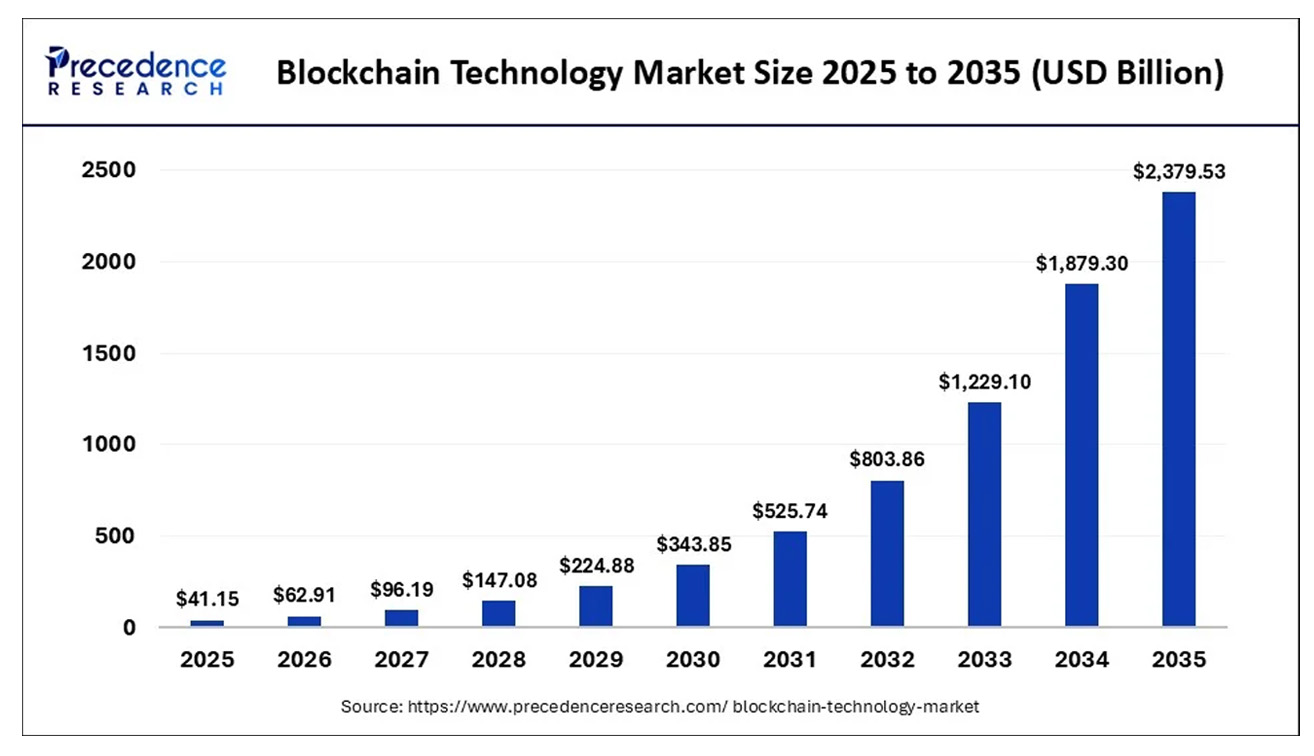
The World Economic Forum calls 2026 the year blockchain crosses into enterprise infrastructure. The market is heading toward $62.91 billion. 92% of institutional asset managers expect broad deployment within three years. The opportunity is real. Finding a blockchain development company that delivers is the hard part.
That’s exactly what this guide covers. This blog helps you find and choose from the top blockchain development companies in 2026.
Why Choosing the Right Blockchain Development Company Matters
The debate about whether blockchain is ready for production is over. The evidence is sitting in the ledgers of the world’s largest institutions.
JPMorgan’s Kinexys platform – the rebranded Onyx has processed over $4 trillion in blockchain-based transactions, with daily volumes exceeding $7 billion. Citi has integrated blockchain token services into its live cross-border payment infrastructure. BlackRock’s leadership has called tokenization “the next generation for markets.” These aren’t pilots anymore. They’re systems running under real regulatory obligations, with real institutional money on the line.
The World Economic Forum puts global cross-border transaction volume at over $250 trillion annually, much of it still slow, fragmented, and expensive. Blockchain is the infrastructure fix most institutions are betting on. Financial services leads adoption with a 28.1% market share, followed by supply chain, healthcare, and government.
Did You Know?
“By 2030, 20% of all monetary transactions will be programmable with stablecoins, deposit tokens, and tokenized real-world assets evolving into mainstream enterprise financial instruments.”
When the wrong partner is chosen, the damage goes beyond a delayed timeline. A failed blockchain engagement in 2026 means compliance gaps that regulators notice, security vulnerabilities that don’t wait, and a full architectural rebuild not a patch. New audits. New vendor relationships. Reopened regulatory conversations. None of that is quick or cheap. That’s why choosing the right blockchain development company deserves the same rigour as choosing the technology itself usually more.
Looking for a blockchain partner that delivers beyond the prototype?
What Defines the Best Blockchain Development Company
The market is full of firms that call themselves blockchain development companies. The criteria that separate the ones worth hiring from the ones that will cost you a rebuild:
- Production track record, not demo portfolios. The single most important filter. Ask for smart contracts that have been running on mainnet or a permissioned production network for 12+ months, with verifiable transaction history. Any firm worth hiring can show this immediately.
- Multi-chain expertise. The right chain for your use case is rarely Ethereum by default – it depends on your privacy requirements, throughput needs, compliance obligations, and interoperability targets. A firm that only builds on one network will steer every project toward that network regardless of fit. The best blockchain development company is fluent across Ethereum, Layer 2s (Arbitrum, Base, zkSync), Hyperledger Fabric, Hyperledger Besu, Cosmos SDK, and Substrate.
- In-house security and audit capability. Blockchain development services that outsource security review create accountability gaps and project delays. The best firms run continuous security testing as part of the development process not as a final checkpoint before delivery.
- Compliance-aware architecture. In 2026, enterprise blockchain deployments that touch financial data, personal data, or regulated assets must be designed with GDPR, MiCA, KYC/AML, and sector-specific regulations built in from the start not retrofitted after the fact. A partner that treats compliance as an afterthought is a partner you will need to replace.
- Post-launch support infrastructure. Protocols require active monitoring, upgrade management, and incident response after go-live. A blockchain development company that delivers a codebase and disappears is not an enterprise partner; it is a contractor.
- Transparent engagement model. Clear scoping, defined milestones, regular delivery checkpoints, and honest communication when requirements change. This is basic in mature software engineering and still rare in the blockchain vendor market.
Top Blockchain Development Companies in 2026: A Comparative Overview
| Company | Core Specialization | Tech Stack | Best For | Clutch Rating |
|---|---|---|---|---|
| Antier Solutions | DeFi, NFT, Exchange, L2, Enterprise | Ethereum, L2s, Cosmos, Substrate, Hyperledger | Full-stack end-to-end delivery | 4.9 ⭐ |
| EvaCodes | Web3, DeFi, Tokenization, Telegram Mini Apps | Ethereum, Bitcoin L2, TON | Web3 startups & DeFi products | 5.0 ⭐ |
| Unicsoft | Enterprise blockchain, Web3 implementation | EVM, Hyperledger | Enterprise Web3 delivery | 4.9 ⭐ |
| MLG Blockchain | Blockchain consulting, token strategy, advisory | Multi-chain | Strategy-first enterprise teams | 4.8 ⭐ |
| Interexy | Mobile-first blockchain, NFT, Web3 apps | EVM, mobile stack | Startups, mobile blockchain apps | 4.9 ⭐ |
| Peiko | DLT, smart contracts, blockchain solutions | EVM, Hyperledger | Mid-market blockchain builds | 5.0 ⭐ |
| SpaceDev | Smart contracts, dApps, full-stack Web3 | EVM, multi-chain | Comprehensive Web3 delivery | 5.0 ⭐ |
| Dexola | Web3 startup dev, DeFi, smart contracts | EVM | Early-stage Web3 startups | 4.9 ⭐ |
| Aetsoft | Tokenization, DLT, smart contracts | EVM, Hyperledger | Tokenization-first projects | 5.0 ⭐ |
| PixelPlex | Regulated exchanges, RWA, compliance blockchain | EVM, multi-chain | Compliance-first blockchain builds | 4.8 ⭐ |
Top Blockchain Development Companies 2026
Antier
Antier is among the most recognized top blockchain development companies globally, with a full-stack delivery practice spanning DeFi protocol architecture, Layer 2 deployments, crypto exchange infrastructure, NFT marketplaces, tokenization platforms, and enterprise-grade smart contract systems.
What separates Antier from most firms on this list is the breadth of the production portfolio: Antier has shipped across Ethereum, Substrate, Cosmos SDK, Hyperledger Besu, Hyperledger Fabric, Arbitrum, Base, and zkSync which means the chain recommendation is based on fit, not familiarity. The team’s blockchain development services cover the full engagement architecture, development, security auditing, and post-launch support without subcontracting critical components to third parties. For businesses that need a single blockchain development company capable of owning the full technical delivery across any protocol family, Antier is built for that accountability.
EvaCodes
EvaCodes is a full-stack Web3 and blockchain development agency. The firm specialises in DeFi products, smart contract development, tokenization platforms, and Telegram Mini Apps with deep expertise in Ethereum, Bitcoin L2, and TON. Clients consistently highlight EvaCodes’ ability to translate complex blockchain requirements into production-ready deliverables, with strong marks for communication and on-time delivery. A strong fit for startups and growth-stage companies building Web3-native products.
Unicsoft
Unicsoft is a reliable mid-market blockchain development company with an amazing track record across enterprise blockchain and Web3 implementation. The team delivers across EVM chains and Hyperledger, making them a practical choice for enterprises that need structured delivery without the overhead of a large consulting firm. Clients value their technical depth and consistent project management.
MLG Blockchain
MLG Blockchain brings a consulting-first approach to blockchain development services, helping enterprises define token strategy, blockchain architecture, and go-to-market models before a line of code is written. Based in North America with a global client base, MLG is the right partner for organisations that need strategic clarity alongside technical execution – particularly in regulated or advisory-heavy environments.
Interexy
Interexy is a Web3 development company, specialising in mobile-first blockchain applications, NFT marketplaces, and scalable Web3 architectures. The firm works across startups and growth-stage businesses, delivering secure, production-grade blockchain products on EVM chains. Reviewers consistently highlight Interexy’s technical capability and structured approach to complex Web3 builds.
Peiko
Peiko is one of the highest review volumes among specialised blockchain development companies on the platform. Based in Kraków, Poland, Peiko delivers distributed ledger technology, smart contract development, and blockchain solutions. 89% of reviewers highlight professionalism and on-time delivery. A dependable option for mid-market teams needing reliable blockchain execution.
SpaceDev
SpaceDev is one of the leading Miami-based blockchain development firms. The team specialises in smart contract development and full-stack decentralised application builds across EVM and multi-chain environments. Over 90% of clients highlight SpaceDev’s communication, flexibility, and on-time project completion making them a strong fit for businesses that need hands-on, collaborative delivery.
Dexola
Dexola is an autonomous blockchain development arm focused on Web3 startup builds and DeFi product delivery. The firm operates with a startup-native mindset, fast iteration, lean processes, and deep EVM fluency making them a practical choice for early-stage Web3 teams that need a technical partner who understands the pace and constraints of product-stage development.
Aetsoft
Aetsoft ranks at the top of Clutch’s Leaders Matrix for tokenization companies, and a strong track record in DLT, smart contract development, and decentralised application delivery. The firm’s tokenization depth makes it a standout choice for projects involving RWA tokenization, asset-backed token infrastructure, or permissioned blockchain deployments where compliance and token mechanics matter.
PixelPlex
PixelPlex is a well-established blockchain development company recognised on Clutch’s top blockchain lists and specialisation in compliance-first blockchain builds including AML/KYC-compliant exchange infrastructure, RWA platforms, and regulatory-aligned DeFi products. PixelPlex suits businesses operating in regulated verticals where technical delivery and legal alignment need to move together.
Ready to choose the right blockchain development partner?
How to Choose the Best Blockchain Development Company
The evaluation process most businesses use to compare websites, read a few case studies, and pick the cheapest bid is exactly why so many blockchain projects end in rebuilds. Here is a framework that actually filters for capability:
Step 1: Define your use case with specificity. Not “we want to build on blockchain.” Which chain? What throughput? What compliance requirements? What integration points? The more specific the brief, the faster you can eliminate firms that do not have relevant experience.
Step 2: Require production references, not case studies. Ask for the smart contract address on mainnet or a permissioned production network. Ask for the on-chain transaction history. Case studies are marketing material. Production contracts are verifiable proof.
Step 3: Evaluate multi-chain fluency. Ask them to recommend a chain for your use case and explain why it beats the alternatives. A firm locked into a single protocol will always recommend that protocol. A firm with genuine breadth will explain the trade-offs.
Step 4: Assess security methodology. Ask how they handle smart contract auditing internally or through a third party, when in the process, what the remediation workflow is. Security that happens at the end of a project is a red flag. Security built into the development process is the standard.
Step 5: Stress-test the post-launch model. Ask what monitoring is in place after go-live, how upgrades are managed, what the incident response process looks like, and how long support is included in the engagement. Many firms are strong on delivery and invisible after handover.
Step 6: Check the pricing model against the scope. The cheapest bid almost always reflects the thinnest scope. Make sure the quote covers architecture, development, testing, security audit, deployment, and a defined support period not just development hours.
Key Blockchain Development Services Every Business Should Look For
Not all blockchain development services are equal. The businesses that build successful blockchain products are the ones that hire a firm capable of delivering across the full service stack, not just the visible layer.
Smart Contract Development and Auditing is the foundation of every on-chain product. A blockchain development company that builds smart contracts without in-house auditing capability is building on a foundation that has not been tested to the standard production systems required.
DeFi Protocol Development covers automated market makers, lending and borrowing protocols, yield optimisation, staking infrastructure, and liquidity pool architecture. This is one of the highest-complexity categories in the market – the firms that do it well have usually built and recovered from at least one production incident.
NFT Platform Development includes smart contract design, marketplace infrastructure, royalty logic, and metadata management across EVM and non-EVM chains. The best blockchain development services providers understand that NFT projects are not just token contracts – they are product ecosystems.
Crypto Exchange Development centralized (CEX), decentralized (DEX), and hybrid requires matching engine architecture, liquidity management, wallet infrastructure, KYC/AML integration, and real-time order book performance under production load. This is a specialization, not a service any generalist blockchain shop can deliver.
Layer 2 Development and Deployment on Arbitrum, Base, zkSync, and similar networks reduces transaction costs and increases throughput for applications that require high-frequency on-chain activity. The deployment is straightforward; the architecture decisions that precede it are not.
RWA Tokenization Platforms require legal-technical alignment: smart contracts that satisfy securities law, custody integration, on-chain governance that satisfies compliance teams, and investor dashboards that satisfy institutional counterparties. This is where the compliance-aware architecture criterion matters most.
Enterprise Blockchain Solutions on Hyperledger Fabric, Besu, Corda, or Cosmos SDK for permissioned deployments in financial services, supply chain, healthcare, and identity. The firms that do this well have shipped under actual enterprise governance not just built on enterprise frameworks.
Questions to Ask Before You Sign
Use this checklist in every final vendor conversation before a contract is signed:
- Can you share a verifiable mainnet or permissioned production deployment from the last 18 months that is comparable to our use case?
- Which chains would you recommend for our architecture and why and what are the trade-offs of each?
- Is smart contract security auditing handled in-house or by a third party? At what stage in the development process?
- How have you handled a smart contract vulnerability or production incident in a previous engagement?
- What does the post-launch support model look like, and what is included in the current engagement versus charged separately?
- How do you handle scope changes? What is the change management process?
- Who specifically will be working on our project, and what is the team structure?
- What compliance frameworks have you designed against – GDPR, MiCA, KYC/AML, SEC digital asset guidance?
- What is your approach to upgradeability and governance for smart contracts after deployment?
- Can you walk us through what went wrong in a previous engagement and how you resolved it?
Discuss your blockchain requirements with experts who’ve delivered production-ready solutions
Blockchain Development Cost in 2026
Blockchain development cost is one of the most misunderstood variables in the procurement process, both overestimated by enterprises that have never bought it before and underestimated by businesses that have received a stripped-down quote from a firm that left half the scope out.
Cost by Project Type
| Project Type | Cost Range | Timeline |
|---|---|---|
| Basic token contract (ERC-20 / ERC-721) | $3,000 – $10,000 | 2-4 weeks |
| NFT marketplace (standard features) | $40,000 – $80,000 | 8-12 weeks |
| DeFi protocol (AMM / lending / staking) | $80,000 – $250,000 | 16-24 weeks |
| Crypto exchange (CEX / DEX / hybrid) | $150,000 – $500,000+ | 20-36 weeks |
| Enterprise blockchain platform | $150,000 – $600,000+ | 24-40 weeks |
| RWA tokenization platform | $100,000 – $400,000 | 20-32 weeks |
| Layer 2 deployment + custom infra | $60,000 – $200,000 | 12-20 weeks |
Note: These are tentative estimations of project development costs and may vary depending on project complexity, team location, technology stack, and specific business requirements.
Developer Hourly Rates by Region
| Region | Hourly Rate Range |
|---|---|
| Southeast Asia | $25 – $55/hr |
| Eastern Europe | $50 – $120/hr |
| India | $30 – $70/hr |
| Western Europe | $100 – $200/hr |
| United States / Canada | $150 – $300/hr |
Emerging Trends Shaping Blockchain Development in 2026
The blockchain development services landscape is not static. The firms that will matter in 2027 are the ones building capability in these areas today.
Real-World Asset (RWA) Tokenization has moved from concept to compliance mandate. The IMF April 2026 report projects tokenized assets growing 5x over the next cycle, driven by institutional adoption of on-chain bonds, real estate, private credit, and commodities. The blockchain development companies positioned here are not just token contract shops – they are firms that can bridge legal structure, custodial infrastructure, and on-chain governance.
ZK Proof Architecture is becoming production-relevant across more use cases from Layer 2 rollups to private transaction verification, supply chain compliance attestation, and identity verification without data exposure. Zero Knowledge Proof smart contracts are also transforming privacy-first supply chain compliance by enabling verifiable transactions without exposing sensitive business data. The scarcity of ZK-fluent developers means firms that have this capability in-house are materially differentiated.
AI + Blockchain Integration is moving from novelty to infrastructure. AI-driven smart contract auditing, on-chain AI computation verification, and decentralized AI model training markets are all in active development. The best blockchain development company candidates for the next wave are the ones that already have engineers working at this intersection.
Cross-Chain Interoperability is being driven by the fragmentation problem assets and users split across dozens of incompatible networks. BIS research shows that G20 cross-border payment targets have been missed repeatedly due to infrastructure fragmentation. The firms building cross-chain bridges, messaging protocols, and chain-abstraction layers are addressing one of the most structurally significant problems in the market.
Permissioned DeFi – DeFi protocols with KYC layers, compliance hooks, and institutional-grade governance is the category driving the most institutional procurement conversations. Enterprises that want DeFi efficiency without public-chain exposure are the primary buyers. This requires a blockchain development company that understands both DeFi mechanics and institutional compliance requirements.
Final Words
The blockchain market in 2026 is not short of development companies. It is short of development companies that can actually deliver what enterprises and product teams need production-grade systems built on the right chain, designed for compliance, secured in-house, and supported after go-live.
The challenge every business faces is that the firms worth hiring and the firms that will waste your budget look identical on a website. The differentiator is always in the details: mainnet deployment history, security methodology, compliance architecture, and what happens when something goes wrong at 2am six months after launch. The best blockchain development companies in 2026 are not competing on price. They are competing on trust built through production delivery, transparent engagement, and the kind of post-launch accountability that most of the market still treats as optional.
The best blockchain development company for your project is the one that can show you exactly where they have done it before, explain why they would do it differently for your use case, and stand behind the result when it is live. Antier is built for that standard. If you are in the evaluation stage, the right conversation starts with your requirements not our pitch deck.
Frequently Asked Questions
01. Why do many blockchain projects fail?
Many blockchain projects fail not due to technology issues, but because the companies behind them have never successfully shipped to production, often leading to budget overruns and incomplete implementations.
02. What is the significance of 2026 for blockchain technology?
The World Economic Forum predicts that 2026 will be the year blockchain crosses into enterprise infrastructure, with a market expected to reach $62.91 billion and 92% of institutional asset managers anticipating broad deployment within three years.
03. What are the risks of choosing the wrong blockchain development company?
Choosing the wrong blockchain development company can lead to compliance gaps, security vulnerabilities, and costly architectural rebuilds, resulting in delays and increased expenses for audits and regulatory discussions.