

✨ AI Summary
- Today's global supply chains are increasingly complex, necessitating more efficient, transparent and reliable tracking systems.
- Blockchain technology is emerging as a solution, not as a replacement of existing infrastructure, but as an enhancement layer that integrates with ERP, WMS, and logistics platforms.
- This blog explores how blockchain in supply chains can transform tracking systems, provide real-world use cases, and discuss enterprise adoption strategies.
- Traditional supply chain systems often struggle with isolated data, lack of real-time visibility, manual processes, and limited trust.
- Blockchain can overcome these issues by enabling secure, real-time data sharing across stakeholders.
Global supply chains today are more complex than ever, spanning multiple countries, logistics partners, and enterprise systems that often operate in isolation. As a result, traditional tracking mechanisms struggle to deliver real-time visibility due to fragmented data, delayed updates, and limited trust across stakeholders.
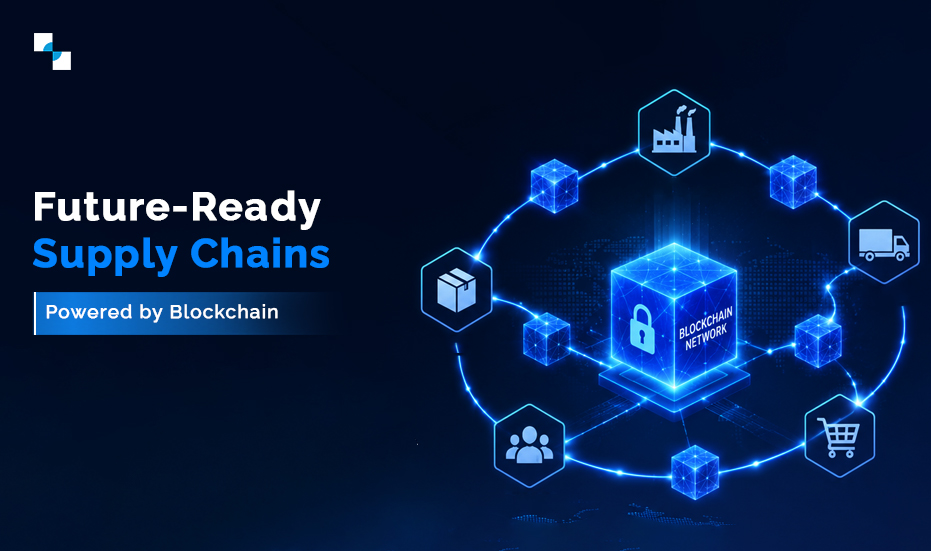
This growing complexity is driving the adoption of blockchain in supply chain ecosystems as a foundational transformation layer. Instead of replacing existing infrastructure, enterprises are leveraging blockchain technology in supply chain systems as an integration-driven enhancement that strengthens transparency, traceability, and data integrity while seamlessly working with ERP, WMS, and logistics platforms.
In this blog, we will explore how blockchain in supply chain is transforming tracking systems without replacing legacy infrastructure, along with real-world use cases, integration models, and enterprise adoption strategies.
Why Blockchain Technology in Supply Chain Is Being Rapidly Adopted
The growing adoption of blockchain technology in supply chain is driven by the need for greater transparency, efficiency, and trust across multi-party global networks.
Enterprises are increasingly facing challenges such as rising counterfeit goods, fragmented logistics operations, and increasing pressure to provide real-time product visibility. At the same time, manual reconciliation processes and disconnected systems are slowing down operations.
To overcome these challenges, organizations are investing in blockchain supply chain solutions that enable secure, real-time data sharing across all stakeholders without disrupting existing enterprise systems.
Limitations of Traditional Supply Chain Systems
Even with advanced ERP platforms and ongoing digital transformation initiatives, traditional supply chain systems continue to face structural limitations that impact efficiency, transparency, and trust across global networks.
Key Limitations:
1. Isolated and Fragmented Data Systems
Most supply chain stakeholders operate independent databases, which leads to data silos, inconsistencies, and a lack of real-time synchronization across the network.
2. Lack of Real-Time Visibility
Traditional systems primarily rely on batch-based updates, which prevents stakeholders from accessing real-time information about goods movement, shipment status, and inventory levels.
3. Heavy Dependence on Manual Processes
Critical activities such as verification, reconciliation, and compliance tracking are still heavily manual in many organizations, resulting in delays and higher chances of human error.
4. Limited Cross-Organization Trust
Since data is controlled individually by each participant, there is limited trust and transparency across the supply chain ecosystem, making collaboration less efficient.
How Blockchain Supply Chain Development Enhances Existing Systems
Modern blockchain supply chain development is designed to enhance, not replace, existing enterprise systems. It functions as a parallel trust layer that integrates with current infrastructure.
In this model, ERP systems continue to manage internal operations such as inventory, procurement, and finance. At the same time, blockchain records verified supply chain events, ensuring data integrity across the ecosystem.
Application Programming Interfaces (APIs) play a critical role by enabling seamless communication between blockchain networks and legacy systems. This allows real-time synchronization of data without disrupting ongoing business operations.
This hybrid architecture has become the preferred approach for most enterprises adopting blockchain supply chain solutions, as it ensures both innovation and operational stability.
Real Enterprise Example of Blockchain in Supply Chain
A practical example of blockchain in supply chain implementation is IBM Food Trust, which uses Hyperledger Fabric to improve food traceability across global supply networks. Built in collaboration with Walmart, the system integrates with existing enterprise infrastructure using GS1 data standards and APIs without replacing any existing logistics platforms. The impact was immediate: tracing the origin of mangoes went from 7 days to 2.2 seconds. Today, the network covers over 25 product categories with partners including Nestlé, Dole, Tyson Foods, and Kroger.
Integration Models in Blockchain Supply Chain Development Companies
A professional blockchain supply chain development company typically implements enterprise solutions using structured integration models based on business requirements and scalability needs.
1. API-Based Integration Model
The API-based model is the most widely adopted approach in enterprise environments. In this model, existing ERP and logistics systems continue to operate as usual, while blockchain captures and records critical supply chain events.
APIs ensure continuous data exchange between systems, enabling real-time updates without disrupting legacy operations. This approach is highly scalable and suitable for large enterprise deployments.
2. Middleware Integration Architecture
In this model, a middleware layer acts as a bridge between blockchain networks and enterprise systems. It manages data transformation, validation, and synchronization across platforms.
This architecture is especially useful in regulated industries where compliance, data formatting, and auditability are critical requirements. It ensures that only verified and standardized data enters the blockchain system.
3. Hybrid Blockchain-Legacy Architecture
The hybrid model combines traditional systems and blockchain into a dual-layer ecosystem. Legacy systems continue to handle operational processes, while blockchain stores verified and immutable records of supply chain events.
Both systems operate simultaneously, ensuring minimal disruption while gradually introducing blockchain capabilities across the organization. This model is widely used in large-scale blockchain supplychain development projects due to its low migration risk.
Key Blockchain Supply Chain Use Cases in Real-World Systems
The application of blockchain supply chain use cases is transforming traditional logistics operations by introducing transparency, automation, and trust across every stage of the supply chain lifecycle.
- Product Traceability and Provenance
Blockchain enables complete end-to-end traceability of products, starting from raw material sourcing and extending to final delivery to the consumer.
This capability is particularly valuable in industries such as food and beverage, pharmaceuticals, and luxury goods, where verifying product origin and authenticity is critical for safety and compliance.
- Real-Time Shipment Visibility
With blockchain supply chain solutions, all logistics stakeholders can access a shared and synchronized view of shipment data in real time.
This improves coordination between suppliers, carriers, and distributors, reduces delays, and enhances overall supply chain efficiency through accurate and timely information sharing.
- Anti-Counterfeiting Systems
Blockchain plays a key role in preventing counterfeit products by creating a unique digital identity for each item in the supply chain.
This ensures that products in industries such as electronics, luxury fashion, and healthcare can be verified for authenticity at every stage of their lifecycle, reducing fraud and protecting brand integrity.
- Supplier Compliance and Audit Tracking
Blockchain simplifies compliance management by securely storing supplier-related documents such as certifications, audit reports, and regulatory approvals in a tamper-proof system.
This improves audit efficiency, strengthens supplier accountability, and enhances trust across global supply chain ecosystems.
Role of Legacy Systems in Blockchain Supply Chain Development
Legacy systems continue to play a critical role in enterprise operations, especially in managing core business functions such as inventory control, order processing, financial records, and internal reporting.
Rather than replacing these systems, blockchain supply chain development integrates with them to enhance transparency and data reliability. Blockchain acts as a verification layer that records and validates key supply chain events, ensuring consistency across all stakeholders.
This approach allows organizations to modernize their infrastructure without disrupting existing operations or risking business continuity.
Planning to build a blockchain supply chain solution?
Benefits of Blockchain Supply Chain Development Without System Replacement
A hybrid approach to blockchain supply chain development allows enterprises to enhance their existing infrastructure without undergoing disruptive system overhauls. Instead of replacing legacy systems, blockchain is integrated as a complementary trust and data verification layer, delivering both operational continuity and digital transformation benefits.
1. Reduced Implementation and Migration Costs
One of the most significant advantages of this approach is cost efficiency. Since enterprises do not need to replace existing ERP, WMS, or logistics systems, they avoid the high expenses associated with full-scale system migration, data rebuilding, and infrastructure redevelopment. Blockchain is introduced in a phased manner, making adoption more financially sustainable.
2. Zero Disruption to Ongoing Operations
Unlike traditional system replacements that often require downtime or system shutdowns, a hybrid blockchain model ensures that business operations continue without interruption. Existing systems keep running as usual, while blockchain operates in parallel to record and verify critical supply chain events in real time.
3. Faster Deployment and Time-to-Value
Because blockchain is integrated with existing systems instead of being built from scratch, enterprises can achieve significantly faster implementation cycles. This allows organizations to start realizing the benefits of transparency, traceability, and automation much earlier compared to full system replacement strategies.
4. Improved Auditability and Compliance Transparency
Blockchain introduces an immutable and time-stamped record of all supply chain activities. This makes audits faster, more reliable, and less dependent on manual verification. Regulatory compliance becomes easier to maintain because all transactions are traceable and cannot be altered retroactively.
5. Strengthened Trust Across Supply Chain Partners
In multi-party supply chain networks, trust is often a challenge due to fragmented data ownership. Blockchain solves this by ensuring that all stakeholders access a single, consistent, and tamper-proof version of data. This shared visibility improves collaboration, reduces disputes, and strengthens long-term business relationships.
Role of a Blockchain Supply Chain Development Company
A specialized blockchain supply chain development company plays a key role in enabling enterprises to adopt blockchain effectively by designing, building, and integrating solutions that work seamlessly with existing supply chain infrastructure.
1. Enterprise-Grade Blockchain Architecture Design
These companies design scalable and secure blockchain architectures tailored to enterprise requirements. This includes defining system structure, consensus mechanisms, data flow, and governance models to ensure high performance, security, and compliance across large-scale supply chain networks.
2. API and Middleware Integration Development
They build robust API frameworks and middleware layers that enable smooth communication between blockchain networks and existing enterprise systems such as ERP, WMS, and logistics platforms. This ensures real-time data exchange without disrupting legacy infrastructure.
3. Permissioned Blockchain Network Implementation
To maintain security and control, these companies develop permissioned blockchain networks where only verified participants such as suppliers, manufacturers, and logistics providers can access or validate data. This ensures data privacy and controlled collaboration across the ecosystem.
4. Regulatory Compliance and Audit Readiness
They implement blockchain solutions that align with global regulatory and compliance standards. This includes creating audit-ready systems with transparent, tamper-proof records that simplify reporting and ensure adherence to industry regulations.
5. ERP and Logistics Ecosystem Integration
Finally, these companies integrate blockchain systems with existing enterprise tools such as ERP platforms and logistics management systems, ensuring a unified and consistent flow of information across the entire supply chain network.
Upgrade supply chain transparency with blockchain
Future of Blockchain in Supply Chain
The future of blockchain in the supply chain is no longer about pilots – it is about production-scale enterprise convergence. According to the World Economic Forum, blockchain technology has the potential to bring together over 100 organizations across 40+ supply chain use cases, and by 2027, an estimated 10% of global GDP will be stored on blockchain-based systems. Blockchain is fast becoming the foundational trust layer embedded within global logistics and supply chain ecosystems.
- Permissioned Blockchain Networks Lead Enterprise Adoption
According to Gartner, data privacy is the top external barrier to achieving supply chain ecosystem goals and permissioned blockchain directly addresses it by enabling controlled data sharing across partners. Private blockchain networks have already captured 54.22% of enterprise market share, with organizations choosing them for scalability, access governance, and regulatory alignment. More than 83% of supply chain organizations plan to invest in ecosystem-enabling technologies in the next three years, with permissioned networks leading adoption.
- Smart Contracts Eliminate Manual Reconciliation
Deloitte identifies smart contracts as a primary blockchain lever for supply chains – enabling automatic execution of payments, compliance triggers, and shipment validations the moment predefined conditions are met. This directly reduces sourcing and administrative costs by replacing paper-based processes, while providing a verifiable, tamper-proof audit trail across every supply chain transaction. Deloitte’s analysis further confirms that blockchain has the potential to reduce administrative and logistics timelines in shipping by more than 85% from over one week to under one day.
- IoT Integration Enables Real-Time, Sensor-Driven Traceability
IoT devices capturing live data on temperature, humidity, location, and handling are increasingly feeding directly onto blockchain ledgers creating an unbroken, verifiable chain of custody across global networks. This combination eliminates manual data entry errors and enables real-time visibility at every stage of the supply chain. By 2026, 60% of global container shipping is expected to use IoT sensors linked to blockchain for route optimization and compliance logging.
- Blockchain-as-a-Service Accelerates Enterprise Deployment
Blockchain-as-a-Service (BaaS) is projected to reach $25 billion by 2027, significantly lowering the barrier to enterprise adoption by removing the need to build and maintain custom blockchain infrastructure. Enterprises can now deploy permissioned supply chain networks faster and at lower cost, compressing implementation timelines from years to months. According to Grand View Research, the blockchain supply chain market is on track to reach $192.9 billion by 2030, growing at a CAGR of 88.8%.
- ESG Compliance and Sustainability Tracking Become Mandatory
Governments globally are enforcing stricter ESG, carbon neutrality, and ethical sourcing regulations and blockchain is emerging as the primary tool for verifiable compliance. As confirmed by Deloitte and the WEF, verifiable emissions data and sourcing claims are becoming both a competitive differentiator and a compliance requirement. The blockchain for sustainable supply chains market is growing at a CAGR of 35.1% through 2034, driven by enterprise ESG mandates.
- Blockchain Becomes the Global Trust Infrastructure
According to Gartner, blockchain is a promising ecosystem management technology because it enables broad collaboration while preserving data access controls across competing organizations. With 82% of executives expecting positive ROI from blockchain adoption within two years, the technology is no longer being evaluated – it is being scaled into production. Blockchain will ultimately serve as the shared, immutable data infrastructure connecting manufacturers, suppliers, logistics providers, and regulators at a global level.
Final Impact of Blockchain Supply Chain Development
The real impact of blockchain supply chain development is not in replacing existing infrastructure, but in strengthening it with a secure, transparent, and verifiable trust layer. By integrating advanced blockchain development solutions with legacy systems, enterprises can transform traditional supply chain operations into more intelligent, connected, and resilient ecosystems. These blockchain development solutions enhance data transparency, enable real-time traceability, reduce fraud risks, improve supplier accountability, and drive greater operational efficiency across the entire supply chain network.
Ultimately, the future of supply chains is not defined by rebuilding systems from the ground up, but by evolving them into interconnected, data-driven networks powered by blockchain in supply chain technology where trust, automation, and visibility are built into every transaction. At Antier, we help enterprises design and build scalable solutions in blockchain in supply chain, enabling secure integration, seamless interoperability, and future-ready digital transformation across global supply chain ecosystems.
Frequently Asked Questions
01. Why is blockchain technology being adopted in supply chains?
Blockchain technology is being adopted in supply chains to enhance transparency, efficiency, and trust among multi-party networks, addressing challenges like counterfeit goods and fragmented logistics operations.
02. What are the limitations of traditional supply chain systems?
Traditional supply chain systems face limitations such as isolated data systems, lack of real-time visibility, and heavy reliance on manual processes, which hinder efficiency and transparency.
03. How does blockchain integrate with existing supply chain infrastructure?
Blockchain integrates with existing supply chain infrastructure by enhancing transparency, traceability, and data integrity without replacing legacy systems, allowing for secure, real-time data sharing among stakeholders.